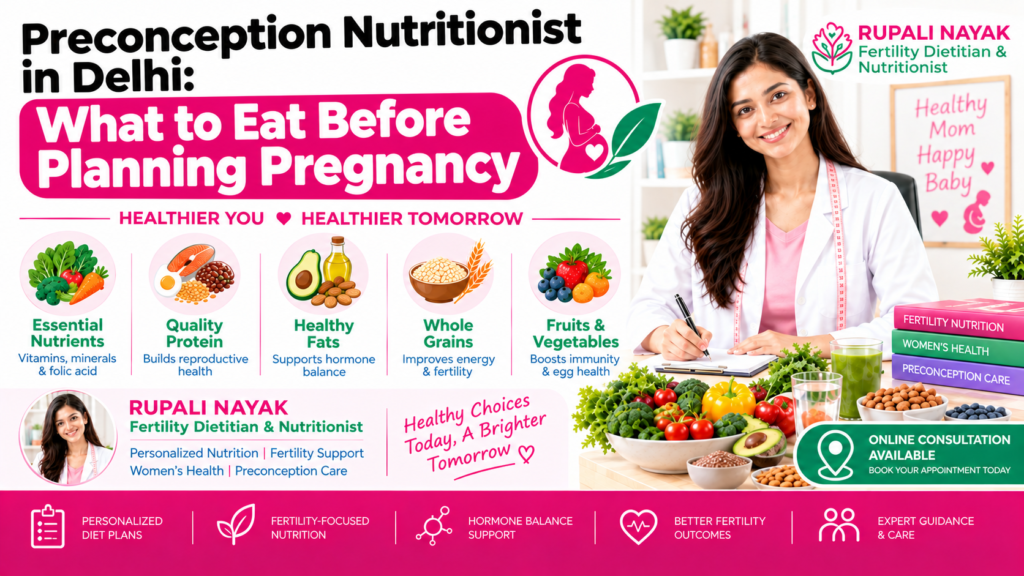
Planning a pregnancy is an exciting journey, but preparing the body before conception is equally important. Good nutrition before pregnancy can support fertility, improve overall health, and create a strong foundation for a healthy pregnancy. Many couples focus only on prenatal care after conception, but experts recommend starting healthy eating habits several months before trying to conceive.
A well-balanced preconception diet provides essential vitamins, minerals, proteins, and healthy fats that help support reproductive health in both men and women. Proper nutrition may also contribute to maintaining a healthy weight, supporting hormone balance, and improving nutrient stores before pregnancy.
People often ask, “What should I eat before planning pregnancy?” or “Which nutrients are important before pregnancy?” The answer lies in a combination of nutrient-rich foods, healthy lifestyle habits, and personalized dietary guidance. Consulting a Preconception Nutritionist in Delhi or a Pre Pregnancy Dietitian in Delhi can help couples make informed food choices and prepare their bodies for the journey ahead.
What Is Preconception Nutrition?
Preconception nutrition refers to the dietary habits and nutritional preparation undertaken before pregnancy. It focuses on ensuring that the body has adequate nutrients required to support fertility and a healthy pregnancy. Health professionals often recommend beginning a preconception diet at least three months before trying to conceive.
The concept of preconception nutrition is not limited to women alone. A preconception diet for men is also important because nutrition can influence overall reproductive health. Balanced meals, healthy lifestyle practices, and maintaining optimal body weight can contribute positively to fertility.
A good preconception plan includes consuming foods rich in folic acid, iron, calcium, protein, omega-3 fatty acids, and antioxidants. It also involves reducing processed foods, excessive sugar, and unhealthy fats. Proper nutrition before pregnancy can help build nutrient reserves, support hormonal balance, and prepare the body for the increased nutritional demands of pregnancy.
Seeking guidance from a Fertility Nutritionist in Delhi, Pregnancy Nutritionist in Delhi, or Preconception Dietitian in Delhi can provide personalized recommendations based on individual health needs and goals.
What to Eat Before Planning Pregnancy
1. Eat More Fruits and Vegetables
Fresh fruits and vegetables are rich in vitamins, minerals, antioxidants, and fiber. They provide nutrients that support reproductive health and overall wellness. Leafy greens, berries, citrus fruits, carrots, and colorful vegetables are excellent choices. Including a variety of fruits and vegetables daily helps improve nutrient intake and supports healthy eating before pregnancy.
2. Include High-Quality Protein
Protein is essential for cell growth and tissue repair. Foods such as lentils, beans, eggs, fish, chicken, dairy products, tofu, and nuts are beneficial. Adequate protein intake supports hormone production and overall reproductive health. Choosing lean and nutritious protein sources can be an important part of a preconception diet for women and men.
3. Add Whole Grains to Your Meals
Whole grains such as oats, brown rice, quinoa, and whole wheat products provide energy and important nutrients. They are rich in fiber, B vitamins, and minerals. Whole grains can help maintain stable energy levels and support healthy digestion, making them an excellent addition to a balanced preconception diet.
4. Choose Healthy Fats
Healthy fats play a role in hormone production and overall wellness. Foods such as avocados, nuts, seeds, olive oil, and fatty fish contain beneficial fats. Including omega-3-rich foods in the diet can contribute to better nutritional balance before pregnancy and support long-term health.
5. Stay Hydrated
Drinking enough water is an essential part of preconception care. Proper hydration supports digestion, circulation, and overall body function. Herbal drinks, coconut water, and fresh fluids can also contribute to hydration. Replacing sugary beverages with healthier options may help improve dietary quality.
Essential Nutrients for Preconception Health
1. Folic Acid
Folic acid is one of the most important nutrients before pregnancy. It supports healthy cell development and is commonly recommended before conception. Foods such as spinach, beans, citrus fruits, and fortified grains contain folate. Many health experts advise starting folic acid intake several months before pregnancy planning.
2. Iron
Iron supports oxygen transport in the body and contributes to overall health. Iron-rich foods include spinach, legumes, lean meats, jaggery, seeds, and fortified cereals. Combining iron-rich foods with vitamin C sources can improve absorption. Adequate iron intake is an important aspect of healthy eating before pregnancy.
3. Calcium
Calcium is essential for maintaining strong bones and teeth. Dairy products, sesame seeds, almonds, tofu, and green vegetables are good sources of calcium. Sufficient calcium intake before pregnancy helps build nutrient reserves and supports future nutritional needs.
4. Vitamin D
Vitamin D works alongside calcium and supports overall health. Sunlight exposure and foods such as fortified dairy products, eggs, and fish can contribute to vitamin D intake. Maintaining adequate vitamin D levels is often considered important in a preconception nutrition plan.
5. Omega-3 Fatty Acids
Omega-3 fats are found in walnuts, flaxseeds, chia seeds, and fatty fish. These healthy fats support overall wellness and contribute to a balanced diet. Including omega-3-rich foods in a preconception plan may help improve nutritional quality.
6. Protein
Protein provides the building blocks required for growth and repair. Good protein sources include eggs, dairy products, legumes, fish, poultry, and nuts. Consuming adequate protein can support a healthy lifestyle before pregnancy.
Foods to Include in a Preconception Diet
1. Green Leafy Vegetables
Spinach, fenugreek, kale, and other leafy vegetables provide folate, iron, and fiber. These nutrients are important before pregnancy and support overall health. Including green vegetables regularly can improve diet quality and nutrient intake.
2. Fresh Fruits
Fruits such as oranges, berries, apples, bananas, and pomegranates offer vitamins, antioxidants, and fiber. They can be included as snacks or part of meals. Fruits support healthy eating before pregnancy and contribute to overall nutritional balance.
3. Nuts and Seeds
Almonds, walnuts, flaxseeds, chia seeds, and pumpkin seeds contain healthy fats, protein, and minerals. Adding a small quantity of nuts and seeds daily can improve nutrient intake and support a balanced preconception diet.
4. Dairy Products
Milk, yogurt, and paneer provide calcium, protein, and other nutrients. Choosing low-fat and nutrient-rich dairy products can support preconception health and help meet daily nutritional needs.
5. Legumes and Pulses
Lentils, beans, chickpeas, and peas provide plant-based protein, iron, and fiber. These foods can be included in meals regularly to support healthy nutrition before pregnancy.
6. Whole Grains
Whole grains provide energy and important nutrients. Oats, brown rice, quinoa, and whole wheat products contribute fiber and B vitamins, supporting balanced nutrition before conception.
Foods to Avoid Before Pregnancy
1. Excess Processed Foods
Highly processed foods often contain excessive salt, sugar, and unhealthy fats. Frequent consumption may reduce the quality of the diet. Replacing processed foods with fresh and nutrient-rich options is beneficial.
2. Sugary Beverages
Soft drinks and sugar-rich beverages provide excess calories with limited nutritional value. Choosing water, fresh juices, and healthier beverages can support better dietary habits before pregnancy.
3. Excessive Caffeine
Moderation is important when consuming tea, coffee, and caffeinated drinks. Excessive caffeine intake may not align with healthy preconception dietary practices. Consulting a nutrition professional can help determine suitable intake levels.
4. Foods High in Trans Fats
Deep-fried and packaged foods often contain unhealthy fats. Limiting these foods and choosing healthier cooking methods can improve the quality of the diet.
5. Excess Alcohol
Many health professionals advise limiting or avoiding alcohol when planning pregnancy. A balanced lifestyle and healthy dietary habits are important parts of preconception care.
6. Highly Sugary Snacks
Frequent consumption of sweets, pastries, and sugar-rich foods can contribute to poor dietary balance. Replacing these with fruits and healthy snacks may support better nutrition.
How a Preconception Nutritionist in Delhi Can Help
A Preconception Nutritionist in Delhi can provide personalized dietary guidance for couples planning pregnancy. Every individual has unique nutritional needs, health conditions, and lifestyle factors that influence dietary requirements. A tailored nutrition plan can help improve eating habits, optimize nutrient intake, and support overall wellness.
A Fertility Nutritionist in Delhi or Pregnancy Dietitian in Delhi can assess dietary patterns, identify nutritional gaps, and recommend suitable food choices. Professional guidance may also help individuals maintain a healthy weight, improve meal planning, and adopt long-term healthy habits.
Nutrition experts can provide recommendations regarding important nutrients before pregnancy, including folic acid, iron, calcium, protein, and healthy fats. They can also guide both men and women on balanced eating strategies and lifestyle modifications.
Whether someone is searching for the Best Preconception Nutritionist in Delhi, Best Fertility Dietitian in Delhi, or Pre Pregnancy Nutritionist in Delhi, personalized nutrition support can be valuable in preparing for a healthy pregnancy journey.
Frequently Asked Questions
What should I eat before planning pregnancy?
A balanced diet including fruits, vegetables, whole grains, proteins, dairy products, nuts, seeds, and healthy fats is commonly recommended before pregnancy.
What is the best diet before pregnancy?
The best diet is one that provides essential nutrients such as folic acid, iron, calcium, protein, and healthy fats while limiting processed foods and excess sugar.
Which nutrients are important before pregnancy?
Folic acid, iron, calcium, vitamin D, protein, and omega-3 fatty acids are among the important nutrients before pregnancy.
How can nutrition support fertility before pregnancy?
Healthy eating can help improve overall wellness, maintain nutrient reserves, and support reproductive health in both men and women.
When should I start a preconception diet?
Many health professionals recommend starting a preconception diet at least three months before planning pregnancy.
What foods should I avoid when planning pregnancy?
Processed foods, excessive sugar, trans fats, alcohol, and high amounts of caffeine are commonly advised to be limited.
Is a preconception diet important for men?
Yes, a balanced preconception diet for men can also support overall reproductive health and healthy lifestyle habits.
Conclusion
Preparing for pregnancy involves much more than simply deciding to have a baby. A balanced diet, healthy lifestyle, and proper nutrient intake can help create a strong foundation before conception. Understanding what to eat before planning pregnancy, focusing on essential nutrients, and making informed food choices are important steps in this journey.
For individuals seeking personalized guidance, consulting an experienced nutrition expert can make the process easier and more effective. Fit With Rupali – Dietitian Rupali Nayak, known for providing customized nutrition support, offers guidance for preconception health, fertility nutrition, and pregnancy wellness to help individuals move toward their health goals with confidence.