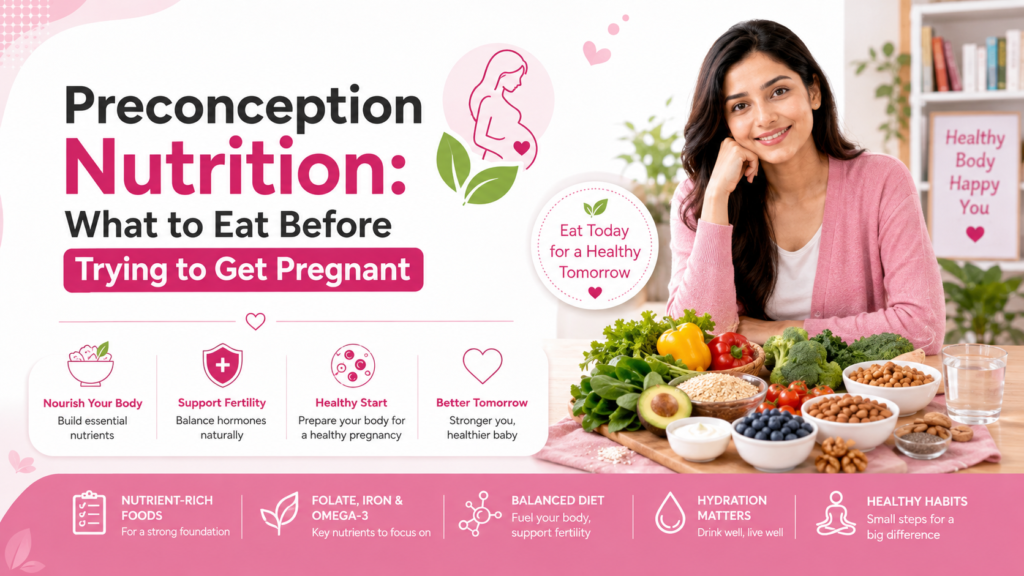
Preparing for pregnancy involves more than tracking ovulation or planning appointments. Preconception Nutrition is an important part of preparing the body for conception and supporting overall reproductive health. A balanced Preconception Diet can help provide essential nutrients needed before pregnancy. Understanding Nutrition Before Pregnancy, choosing nourishing foods, and maintaining healthy lifestyle habits can create a strong nutritional foundation for the pregnancy journey.
This guide explains what to eat before trying to conceive, which nutrients deserve attention, which foods may be better limited, and how a Pregnancy Dietitian can help create an individualized approach to pre-pregnancy nutrition.
What Is Preconception Nutrition?
Preconception Nutrition refers to the dietary and nutritional habits followed before pregnancy. It focuses on providing the body with adequate calories, protein, vitamins, minerals, healthy fats, fiber, and fluids while supporting overall health.
A well-planned Preconception Diet does not need to be complicated. It generally emphasizes a variety of vegetables and fruits, whole grains, legumes, nuts, seeds, dairy or suitable alternatives, lean proteins, and healthy fats. The goal is to build consistent eating habits rather than depend on individual “fertility foods.”
Pre-Pregnancy Nutrition is also about identifying potential nutrient gaps. Nutrients such as folate, iron, iodine, vitamin D, vitamin B12, calcium, choline, and omega-3 fatty acids can be relevant before pregnancy, although individual requirements vary.
Nutrition needs should be considered alongside factors such as age, dietary pattern, existing health conditions, medications, body weight, and previous pregnancy history. A qualified Pregnancy Nutritionist can help assess these factors and develop practical recommendations suited to individual needs.
Why Nutrition Matters Before Pregnancy
The period before conception provides an opportunity to establish healthier dietary patterns and address nutritional deficiencies. Good Nutrition Before Pregnancy can support general health while preparing the body for the nutritional demands that increase during pregnancy.
A balanced diet provides nutrients involved in blood formation, cell growth, immune function, bone health, energy metabolism, and normal reproductive processes. For example, adequate folate before conception is particularly important because early fetal development begins soon after conception, sometimes before pregnancy is recognized.
Diet Before Pregnancy should therefore focus on consistency rather than quick dietary changes. Regular meals, adequate hydration, sufficient protein, a variety of plant foods, and appropriate sources of essential nutrients can form the foundation of a healthy pregnancy diet.
However, nutrition alone does not guarantee conception or prevent pregnancy complications. Fertility and pregnancy outcomes are influenced by many factors. Anyone planning pregnancy should also discuss appropriate supplements, medications, health conditions, and vaccinations with their healthcare professional.
What to Eat Before Trying to Conceive
1. Leafy Green Vegetables
Leafy greens such as spinach, kale, fenugreek leaves, and other green vegetables can contribute folate, fiber, vitamin K, and other micronutrients. Including different vegetables throughout the week makes the diet more diverse. Since food sources alone may not provide recommended folic acid levels before pregnancy, supplementation should be discussed with a healthcare professional.
2. Whole Grains
Whole grains such as oats, brown rice, whole-wheat products, quinoa, and millet provide carbohydrates, fiber, and several vitamins and minerals. Replacing some refined grains with whole-grain choices can make meals more nutrient-dense. Pairing whole grains with protein and vegetables can also create balanced meals suitable for a Preconception Diet.
3. Protein-Rich Foods
Protein is important for maintaining tissues and supporting normal body functions. Include options such as eggs, beans, lentils, chickpeas, dairy products, tofu, nuts, seeds, fish, or lean meats according to dietary preferences. A varied protein intake can help meet nutritional needs while making meals more satisfying and balanced.
4. Fruits and Berries
Fruits provide vitamins, minerals, fiber, and naturally occurring antioxidants. Include a variety of seasonal fruits such as oranges, apples, guava, berries, bananas, papaya, and other locally available options. Rather than relying on one particular “fertility fruit,” aim for variety and appropriate portions as part of an overall balanced Healthy Pregnancy Diet.
5. Healthy Fats
Nuts, seeds, avocados, olive oil, and suitable fish can provide unsaturated fats and other valuable nutrients. Omega-3 fatty acids are particularly relevant to maternal nutrition. If consuming fish, choose lower-mercury options and follow pregnancy-safe food guidance. Plant-based sources such as walnuts and flaxseeds can also contribute healthy fats.
6. Dairy and Fortified Alternatives
Milk, yogurt, cheese, and fortified plant-based alternatives can provide calcium, protein, vitamin D, and other nutrients depending on the product. Choose options that fit your dietary requirements and preferences. People avoiding dairy should check labels on fortified alternatives to ensure they provide nutrients such as calcium and vitamin D.
Essential Nutrients for Preconception
1. Folic Acid Before Pregnancy
Folic acid before pregnancy is one of the most important nutritional considerations when planning conception. Adequate folic acid intake helps reduce the risk of neural tube defects. Health authorities commonly recommend folic acid supplementation before pregnancy, but the appropriate dose can vary for certain individuals. Discuss supplementation with a healthcare professional.
2. Iron Before Pregnancy
Iron before pregnancy deserves attention because iron supports hemoglobin production and oxygen transport. Iron needs increase during pregnancy, and low iron stores may require dietary changes or supplementation. Good food sources include lentils, beans, leafy greens, eggs, meat, and fortified foods. Iron supplements should be taken according to professional advice.
3. Iodine
Iodine supports normal thyroid hormone production, which is important for pregnancy and fetal development. Sources may include iodized salt, dairy products, seafood, and fortified foods depending on the diet. Because iodine requirements and supplement needs can differ, people planning pregnancy should discuss appropriate intake with their healthcare provider.
4. Vitamin D
Vitamin D contributes to bone health, calcium absorption, and normal immune function. Food sources include fortified dairy products, eggs, and certain fish, while sunlight contributes to vitamin D production. Supplementation may be necessary for people with low levels, but testing and individualized advice can help determine whether supplementation is appropriate.
5. Vitamin B12
Vitamin B12 is particularly important for people following vegetarian or vegan diets because reliable dietary sources can be limited. It supports red blood cell formation and neurological function. Sources include dairy, eggs, meat, fish, and fortified foods. Individuals with limited animal-food intake should discuss B12 requirements and supplementation with a healthcare professional.
6. Omega-3 Fatty Acids
Omega-3 fatty acids are found in foods such as certain fish, walnuts, chia seeds, and flaxseeds. They are involved in several important biological functions. When choosing fish, pregnancy-planning individuals should prioritize lower-mercury varieties and follow food-safety recommendations. Supplements should be discussed with a healthcare professional before use.
READ ALSO : Top 10 Pregnancy Diet Tips by Expert Dietitians in Delhi | Rupali Nayak
Foods to Avoid Before Pregnancy
1. High-Mercury Fish
Certain fish contain higher levels of mercury, which can be harmful during pregnancy. If you are preparing for pregnancy, becoming familiar with fish-safety recommendations can help you make informed choices. Lower-mercury seafood can still provide valuable nutrients, so the goal is generally to choose safer varieties rather than avoid seafood altogether.
2. Excessive Caffeine
High caffeine intake is generally discouraged during pregnancy, and people planning conception may choose to moderate intake as part of preparing for pregnancy. Coffee, tea, energy drinks, chocolate, and some supplements can contain caffeine. Check total daily intake from all sources and discuss an appropriate limit with your healthcare provider.
3. Highly Processed Foods
Highly processed foods can be high in added sugars, sodium, saturated fats, and calories while providing fewer essential nutrients. They do not necessarily need to be completely eliminated, but they are better consumed less frequently. Build most meals around vegetables, fruits, whole grains, protein sources, and healthy fats.
4. Unpasteurized Foods
Unpasteurized milk and certain foods made with unpasteurized ingredients can carry harmful bacteria. Food safety becomes especially important when preparing for pregnancy because some infections can create serious pregnancy risks. Choose pasteurized dairy products and follow safe food-handling practices, including proper refrigeration, cooking, and hand hygiene.
5. Alcohol
Alcohol should be avoided when trying to conceive and during pregnancy because there is no established safe amount of alcohol during pregnancy. This includes alcoholic beverages of different types. If you are planning pregnancy and find it difficult to stop drinking, speak with a healthcare professional for appropriate support.
How to Prepare Your Diet for Pregnancy
1. Build Balanced Meals
Aim to make meals more balanced by combining vegetables or fruit, a protein source, whole grains or other high-fiber carbohydrates, and healthy fats. This approach can make Pre-Pregnancy Nutrition practical and sustainable. Instead of following restrictive diets, focus on consistency, variety, portion awareness, and adequate nourishment.
2. Start Focusing on Nutrient Density
Choose foods that provide multiple nutrients rather than concentrating on calories alone. Vegetables, fruits, legumes, whole grains, nuts, seeds, dairy or fortified alternatives, and quality protein sources can improve overall dietary variety. Nutrient-dense choices can help create a strong foundation for the increased nutritional requirements of pregnancy.
3. Review Supplements
Prenatal vitamins and individual supplements should not be selected solely based on online recommendations. Folic acid is particularly important before conception, while other nutrient requirements depend on diet, health status, laboratory values, and individual circumstances. A healthcare professional can recommend appropriate supplements and doses.
4. Stay Hydrated
Water supports normal body functions and helps maintain hydration during the preconception period. Keep water available throughout the day and adjust intake according to activity, weather, and individual needs. Sugary drinks can be limited in favor of water and other appropriate low-sugar beverages.
5. Avoid Extreme Diets
Very restrictive diets, prolonged fasting, or drastic calorie reduction may make it difficult to meet nutritional requirements. If weight management is relevant before pregnancy, a gradual and professionally guided approach is generally more appropriate than crash dieting. The focus should remain on adequate nutrition and sustainable health habits.
READ ALSO : Best Pregnancy Dietitian in Gurgaon: Foods, Meal Plans & Expert Tips
When Should You See a Pregnancy Dietitian?
A Pregnancy Dietitian can be useful before conception, particularly when someone wants personalized guidance instead of following a generic diet plan. A consultation may help review current eating habits, nutritional requirements, supplement use, food preferences, and lifestyle factors.
You may consider consulting a Pre-Pregnancy Dietitian if you follow a vegetarian or vegan diet, have dietary restrictions, experience difficulty meeting nutrient needs, or want structured guidance while preparing for pregnancy.
A Fertility Dietitian or Fertility Nutritionist may also provide nutrition guidance for people navigating fertility treatment or trying to optimize overall dietary habits. However, nutrition is one part of fertility care and should complement appropriate medical evaluation and treatment.
Someone searching for the Best Pregnancy Dietitian for Preconception Nutrition should look for a qualified professional who uses evidence-based nutrition principles and considers individual needs rather than promising guaranteed fertility results.
For people seeking the Best Dietitian for Pregnancy and Fertility, it is also useful to understand the professional’s qualifications, scope of practice, approach to supplements, and experience with preconception and pregnancy nutrition.
FAQs
What should I eat before trying to conceive?
Focus on a varied diet containing vegetables, fruits, whole grains, legumes, nuts, seeds, healthy fats, and adequate protein. Include foods containing folate, iron, iodine, calcium, vitamin B12, vitamin D, and omega-3 fatty acids according to individual needs. A healthcare professional can help identify nutritional gaps.
Can a pregnancy dietitian help before conception?
Yes. A Pregnancy Nutritionist or dietitian can provide individualized guidance before conception, including meal planning, nutrient assessment, food-safety advice, and supplement considerations. They can help develop practical dietary habits based on your health, food preferences, lifestyle, and nutritional requirements.
When should I see a pregnancy dietitian?
You can consult a dietitian before actively trying to conceive if you want to improve your diet, identify nutrient gaps, manage dietary restrictions, or understand supplement requirements. Earlier guidance can also be useful when managing specific nutritional concerns or preparing for fertility treatment.
What is the best diet before pregnancy?
There is no single diet that is best for everyone. A balanced, varied, nutrient-dense eating pattern is generally more appropriate than a restrictive diet. Your Pregnancy Diet Plan should reflect your nutritional needs, dietary preferences, health conditions, and professional recommendations.
What foods should I eat before getting pregnant?
Include vegetables, fruits, whole grains, beans, lentils, eggs, dairy or fortified alternatives, nuts, seeds, and suitable protein sources. Lower-mercury fish can also provide valuable nutrients for people who eat seafood. Variety is more important than relying on individual foods marketed as fertility boosters.
What nutrients are important before pregnancy?
Important nutrients can include folate, iron, iodine, vitamin D, vitamin B12, calcium, choline, and omega-3 fatty acids. Requirements differ between individuals. Folic acid supplementation before conception is particularly important, so discuss the appropriate supplement and dose with your healthcare professional.
Conclusion
A well-planned Preconception Nutrition approach can help establish healthy dietary habits before pregnancy and support adequate intake of important nutrients. Prioritize variety, balanced meals, nutrient-dense foods, hydration, food safety, and appropriate supplementation rather than restrictive or unproven fertility diets.
For personalized Pre-Pregnancy Nutrition, a qualified professional can assess your diet and create recommendations suited to your needs. Rupali Nayak, a dietitian, can provide individualized guidance for people looking for structured nutrition support during pregnancy planning and the preconception stage.