Polycystic Ovary Syndrome (PCOS) can affect menstrual health, weight management, metabolic health, skin, hair, fertility, and overall well-being. Nutrition is an important part of managing these concerns, but there is no single diet that works identically for every person with PCOS. A personalized approach based on food preferences, lifestyle, health goals, and individual needs can make dietary changes easier to maintain.
If you are searching for the Best Dietitian for PCOS in Noida, choosing someone who understands PCOS-specific nutrition can help you build practical and sustainable eating habits. The right professional can assess your needs and create a Personalized PCOS Diet Plan rather than relying on restrictive or generic diet charts.
Why You Need a Specialized PCOS Dietitian
PCOS is a complex condition, and nutrition requirements can differ from one person to another. Some people may primarily want help with weight management, while others may be concerned about irregular periods, insulin resistance, hormonal health, fertility, or maintaining a healthier lifestyle.
A specialized PCOS Dietitian in Noida can help connect your nutritional goals with your individual requirements. The focus should not simply be on cutting calories or removing large numbers of foods. Current international guidance emphasizes sustainable healthy eating tailored to personal preferences and goals, with no evidence that one particular diet composition is universally superior for PCOS.
A qualified professional can also help you understand portion sizes, meal timing, food quality, protein intake, fibre-rich foods, and realistic lifestyle changes. This can be especially useful if previous diets were difficult to follow or produced short-term results.
Whether you are looking for a PCOS Dietician in Noida, a PCOS Nutritionist in Noida, or an Online PCOS Dietitian in Noida, consider choosing someone who provides personalized guidance instead of a one-size-fits-all plan.
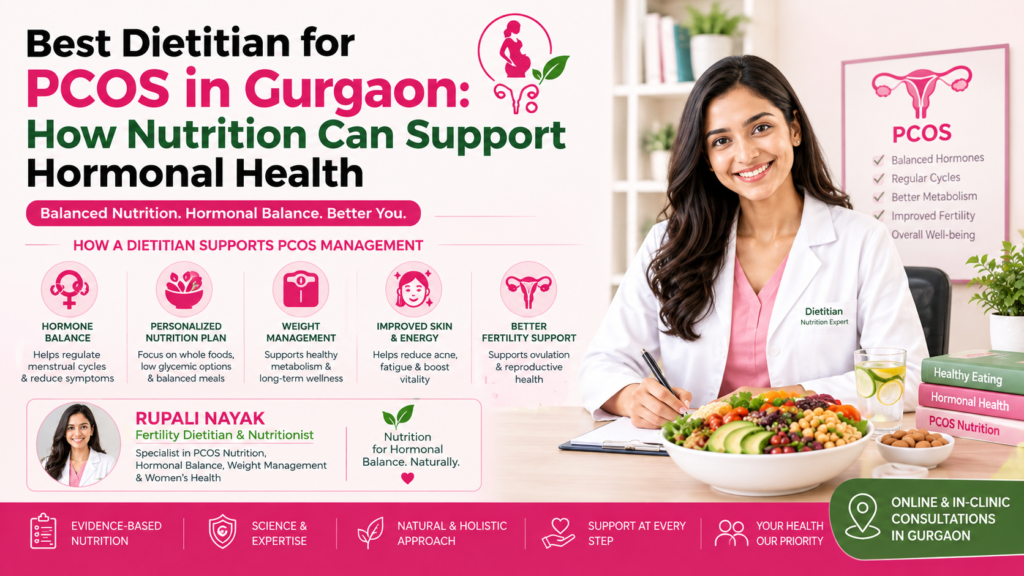
Read Also – Best Dietitian for PCOS in Gurgaon: How Nutrition Can Support Hormonal Health
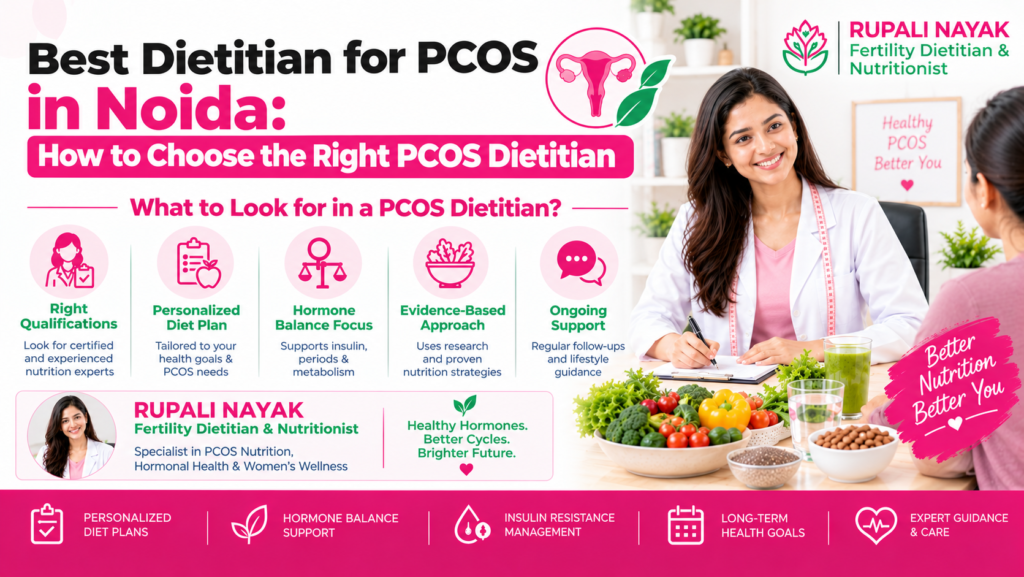
How to Choose the Best Dietitian for PCOS in Noida
Knowing how to choose the best dietitian for PCOS in Noida can make your search easier. Instead of selecting a professional only because of online rankings or promises, consider the following factors.
Look for PCOS-specific nutrition experience
PCOS can involve several nutritional and lifestyle considerations. Look for a professional who regularly works with PCOS-related concerns and understands how diet, activity, weight management, and overall lifestyle can fit together.
Ask about personalized diet planning
A good consultation should consider your eating habits, food preferences, daily routine, activity level, health goals, and dietary restrictions. A personalized plan is generally more practical than receiving the same diet chart given to every client.
Check whether the approach is sustainable
Avoid approaches based on extreme restriction, unnecessary food elimination, or unrealistic promises. Current guidelines recommend healthy eating that is sustainable, flexible, and adapted to individual preferences and goals.
Consider online consultation options
If travelling to a clinic is inconvenient, an Online PCOS Diet Consultation can provide a convenient way to discuss your nutritional goals and receive ongoing guidance. Online support may be particularly useful for people with busy schedules or those living away from the consultation location.
Read Also – PCOS and Fertility Diet: What to Eat When Trying to Conceive
What a Personalized PCOS Diet Plan Should Include
1. Individual nutritional assessment
A Personalized PCOS Diet Plan should begin with an understanding of your current eating habits, lifestyle, preferences, health goals, and relevant concerns. Rather than immediately eliminating foods, the dietitian can identify practical areas for improvement and build a plan around your routine. This personalized approach can make healthy changes easier to understand and maintain over time.
2. Balanced meals with adequate protein
Protein can be incorporated into balanced meals through options such as eggs, dairy products, legumes, pulses, tofu, paneer, fish, or other suitable sources based on dietary preferences. Pairing protein with fibre-rich carbohydrates and vegetables can make meals more balanced. The exact quantity should depend on individual nutritional requirements rather than a universal formula.
3. Fibre-rich and minimally processed foods
A PCOS-friendly eating pattern can include vegetables, fruits, whole grains, pulses, beans, nuts, and seeds. These foods can contribute fibre and other important nutrients while supporting overall dietary quality. Instead of focusing only on individual “good” or “bad” foods, the overall quality and sustainability of the eating pattern should remain the priority.
4. Flexible meal choices
A practical diet should fit your culture, schedule, preferences, and food availability. An Indian diet can be adapted for PCOS without removing familiar foods completely. Meals such as dal, vegetables, roti, curd, rice, sprouts, paneer, eggs, and other preferred foods can potentially fit into a balanced plan depending on individual requirements and portions.
5. Goals based on your individual needs
Your nutrition goals may involve weight management, healthier eating habits, metabolic health, menstrual health, or general well-being. A dietitian should discuss these goals with you instead of assuming that weight loss is the only objective. Evidence-based guidance emphasizes healthy lifestyle benefits even when weight loss is not the primary outcome.
6. Ongoing monitoring and adjustments
Your nutritional plan may need changes as your routine, preferences, progress, or goals change. Regular follow-ups can help identify what is working and what feels difficult to maintain. This makes the plan more flexible and realistic. Ongoing support can also help you stay consistent instead of repeatedly starting and abandoning restrictive diets.
Read Also – Best Dietician in Delhi for PCOS – Complete Guide for Women
Best Foods for PCOS and Hormonal Balance
1. Vegetables and leafy greens
Vegetables are useful components of a balanced PCOS-Friendly Indian Diet because they provide fibre, vitamins, minerals, and other nutrients. Include a variety of seasonal vegetables such as spinach, beans, carrots, cauliflower, capsicum, gourds, and other locally available choices. Combining different colours and types can help increase dietary variety and improve overall meal quality.
2. Protein-rich foods
Protein-rich foods can make meals more satisfying and help create a balanced plate. Depending on dietary preferences, options can include eggs, curd, paneer, tofu, dal, chickpeas, rajma, fish, chicken, or other suitable foods. A dietitian can help determine appropriate portions according to your nutritional needs, activity level, preferences, and overall health goals.
3. Whole grains and high-fibre carbohydrates
Whole grains and fibre-rich carbohydrate sources can be part of a balanced PCOS eating pattern. Options may include oats, whole-wheat roti, brown rice, millets, quinoa, or other suitable grains. The goal is not necessarily to eliminate carbohydrates, but to select appropriate foods and portions while creating balanced meals that fit your lifestyle and nutritional requirements.
4. Fruits in appropriate portions
Fruits can provide fibre, vitamins, minerals, and naturally occurring carbohydrates. Instead of completely avoiding fruit because of concerns about sugar, focus on overall dietary balance and appropriate portions. Apples, guava, berries, oranges, papaya, pears, and other fruits can be included according to personal preferences. Individual meal planning should consider the complete diet rather than one food alone.
5. Nuts and seeds
Nuts and seeds can provide healthy fats, protein, fibre, and other nutrients. Almonds, walnuts, chia seeds, flaxseeds, pumpkin seeds, and similar options can be incorporated into meals or snacks in suitable portions. They can add variety and nutritional value to a balanced diet, although portion sizes still matter because nuts and seeds are energy-dense foods.
6. Fermented and dairy foods
Curd and other suitable dairy or fermented foods can be included when tolerated and appropriate for the individual. They may provide protein and other nutrients that contribute to a balanced diet. People with dietary restrictions or intolerance can discuss suitable alternatives with a qualified professional rather than removing entire food groups unnecessarily.
Foods to Avoid or Limit With PCOS
1. Highly processed foods
Highly processed foods can sometimes be high in added sugars, sodium, saturated fat, or calories while providing fewer beneficial nutrients. Regularly relying on packaged snacks, fast foods, and heavily processed meals may make healthy eating more difficult. Instead of creating a strict forbidden-food list, focus on improving overall dietary quality and making nutrient-rich foods the regular choice.
2. Sugary beverages
Soft drinks, sweetened beverages, energy drinks, and other drinks containing significant amounts of added sugar can add calories without providing much nutritional value. Replacing them with water or other suitable unsweetened options can be a simple dietary change. Individual needs vary, so a dietitian can help you identify realistic beverage choices that fit your daily routine.
3. Excessive refined carbohydrates
Refined carbohydrate foods such as highly processed breads, bakery products, sweets, and similar foods may be better consumed less frequently as part of an overall balanced eating pattern. This does not mean carbohydrates need to be completely eliminated. The focus should be on food quality, portion sizes, meal balance, and sustainable choices rather than unnecessary restriction.
4. Frequent deep-fried foods
Deep-fried snacks and meals can contribute substantial amounts of energy and may be low in overall nutritional value when eaten frequently. Foods such as fried snacks, chips, and heavily fried fast foods can be limited while meals are built around vegetables, protein sources, whole grains, and other nutrient-rich options. Occasional foods can still fit into a flexible eating pattern.
5. Excessive added sugar
Frequent intake of sweets, desserts, sugary cereals, sweetened beverages, and other foods high in added sugar can make it harder to maintain a balanced eating pattern. Instead of completely avoiding every sweet food, focus on reducing frequency and portion size. A sustainable approach is generally easier to maintain than highly restrictive rules that are difficult to follow long-term.
6. Extreme restrictive diets
Very restrictive diets that eliminate multiple food groups without a clear nutritional reason may create unnecessary challenges. The international PCOS guideline does not support one specific diet composition as universally superior and recommends sustainable healthy eating tailored to individual preferences and goals. A qualified professional can help prevent unnecessary restriction while keeping nutrition balanced.
PCOS Diet for Weight Management and Insulin Resistance
Weight management can be an important concern for some people with PCOS, but it should not be treated as the only measure of health. The international PCOS guideline recommends healthy lifestyle practices for metabolic health and weight management, while also recognizing benefits that can occur even without weight loss.
A PCOS Diet for Weight Loss should therefore focus on sustainable habits rather than extreme calorie restriction. Depending on individual requirements, this may include balanced meals, appropriate portions, adequate protein, fibre-rich foods, regular physical activity, sufficient sleep, and consistent eating patterns.
Insulin resistance is an important feature associated with PCOS, but nutrition should not be reduced to simply “controlling insulin.” A comprehensive approach considers the person’s overall metabolic health, dietary pattern, physical activity, and individual circumstances.
If weight management is one of your goals, a dietitian can help create a suitable calorie and nutrient strategy based on your requirements. The objective should be a plan that you can realistically continue rather than a short-term crash diet.
Read Also – How to Choose the Best Dietitian for PCOS in Gurgaon: Complete Guide
FAQs
What should I eat if I have PCOS?
A balanced diet can include vegetables, fruits, whole grains, pulses, legumes, protein-rich foods, nuts, seeds, and other nutrient-dense choices. There is no single food that manages PCOS on its own. Your food choices should be adapted to your nutritional needs, preferences, lifestyle, and health goals.
Which diet is best for PCOS?
There is no single diet composition proven to be universally superior for PCOS. Current international guidance recommends sustainable healthy eating tailored to individual preferences and goals rather than prescribing one specific diet for everyone.
Can a dietitian help manage PCOS?
Yes. A qualified dietitian can provide nutrition education, help identify practical dietary changes, develop a personalized eating plan, and support healthy lifestyle and weight-management goals. Nutrition is one component of PCOS management and may be coordinated with other healthcare professionals when required.
What foods should be avoided in PCOS?
There is no universal list of foods that every person with PCOS must completely avoid. However, highly processed foods, excessive added sugars, frequent sugary beverages, and heavily fried foods may be limited as part of a balanced eating pattern. Individual dietary needs should always be considered.
Who is the best dietitian for PCOS in Noida?
The right professional depends on your individual requirements, dietary preferences, health goals, consultation needs, and the type of support you are looking for. Look for appropriate qualifications, PCOS nutrition experience, personalized planning, practical guidance, and a sustainable approach rather than choosing based only on marketing claims.
How do I choose a PCOS dietitian in Noida?
Ask about their experience with PCOS, consultation process, personalized diet planning, follow-up support, and approach to weight management. If visiting a clinic is difficult, you can also consider an Online PCOS Diet Consultation based on your location and schedule.
What does a PCOS dietitian do?
A PCOS dietitian evaluates your dietary habits and nutrition goals and helps develop a practical eating strategy. Depending on your needs, this may include guidance on balanced meals, portion sizes, food choices, weight management, lifestyle habits, and sustainable dietary changes.
Can nutrition help manage PCOS symptoms?
Nutrition is an important component of lifestyle management for PCOS. Healthy eating and physical activity can support general health, metabolic health, body composition, and weight management. However, nutrition should be considered as part of a broader, individualized PCOS management approach rather than a standalone cure.
Conclusion
Finding the Best Dietitian in Noida for PCOS is less about following a trendy diet and more about finding personalized, practical, and sustainable nutrition support. A suitable professional should understand PCOS-related nutritional concerns, consider your food preferences and lifestyle, and create a Personalized PCOS Diet Plan around your individual goals.
For women looking for personalized PCOS nutrition guidance in Noida or through online consultations, Rupali Nayak provides diet and nutrition support focused on creating practical dietary strategies for individual needs. Whether your goal is better eating habits, weight management, hormonal health, or a healthier lifestyle, personalized guidance can help you make informed and sustainable nutrition choices.