
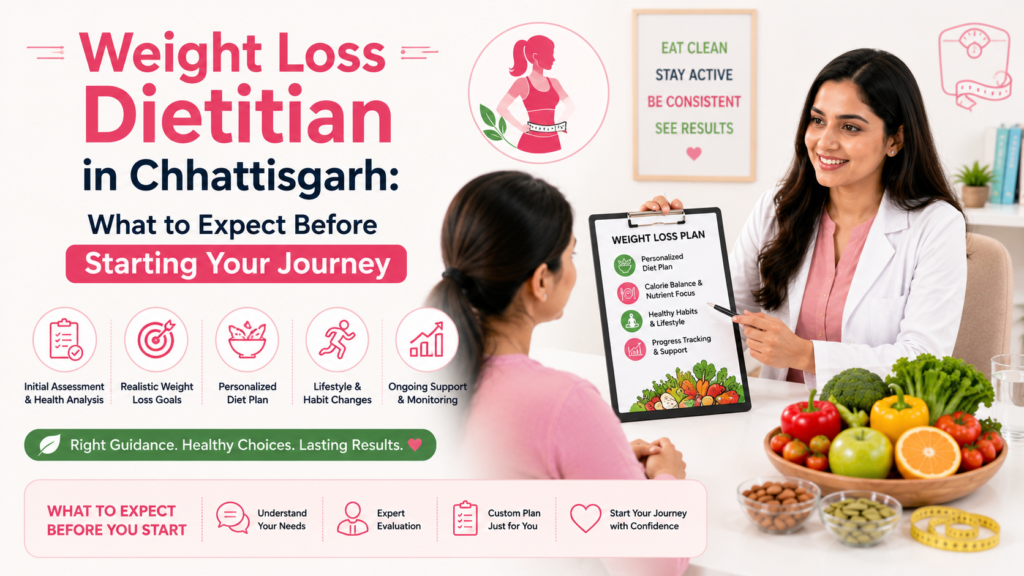
Starting a weight loss journey can feel exciting, confusing, and sometimes overwhelming. With countless diet trends, online meal plans, supplements, and fitness advice available today, it can be difficult to know what actually works for your body and lifestyle. This is where a Weight Loss Dietitian in Chhattisgarh can provide structured and practical guidance.
A professional dietitian looks beyond calories and focuses on your eating habits, lifestyle, health history, food preferences, activity level, and weight management goals. Instead of following a temporary diet, you can work toward a Healthy Weight Loss Diet that is realistic and sustainable.
Before starting, it is important to understand what happens during consultation, how your diet plan is created, what results you can realistically expect, and how to stay consistent when progress becomes slower.
Before You Start: Is Weight Loss Diet Right for You?
A weight loss diet is not simply about eating less food. It is about creating healthier eating patterns that provide adequate nutrition while supporting gradual weight management. Before beginning a Diet Plan for Weight Loss, you should understand your current habits, expectations, and reasons for wanting to lose weight.
A professional assessment can help determine whether your goal is realistic and what type of nutritional approach may suit you. Factors such as age, activity level, eating routine, sleep, stress, medical history, and food preferences can influence your approach.
One of the biggest advantages of working with a Weight Loss Dietitian Chhattisgarh is that the focus can be on long-term habits rather than rapid results. A good plan should fit into your normal routine instead of forcing you to completely change your lifestyle overnight.
It is also important to set realistic expectations. Weight loss does not always happen at the same rate every week. Your body weight can fluctuate because of hydration, food intake, activity, hormonal changes, and other factors.
Therefore, before starting your journey, focus on questions such as:
- What is my actual weight management goal?
- Can I follow this diet consistently?
- Does the plan provide balanced nutrition?
- Can I maintain these habits long term?
- What lifestyle changes should accompany my diet?
This approach can help you begin your journey with realistic expectations rather than depending on quick-fix solutions.
Your First Meeting With a Dietitian: What Really Happens?
Many people feel nervous before their first consultation because they are unsure what a dietitian will ask. In reality, the first meeting is generally about understanding you rather than simply giving you a food chart.
If you are consulting a Weight Loss Dietician in Chhattisgarh, the discussion may include your current eating habits, meal timings, lifestyle, activity level, sleep routine, food preferences, previous diet attempts, and weight-related goals.
You may also be asked about your health history and any medications or dietary restrictions relevant to your nutritional planning. Depending on your situation, the dietitian may review available health information or recommend appropriate professional medical evaluation when necessary.
The purpose is to understand the reasons behind your current eating patterns. For example, someone may struggle with portion sizes, irregular meals, frequent snacking, emotional eating, or a highly sedentary routine.
Your consultation may therefore focus on identifying practical areas for improvement rather than blaming you for previous diet attempts.
You can also use the first consultation to ask important questions. Ask how the plan will be customized, how progress will be monitored, what happens if your weight loss slows down, and how the diet can fit around your work and social routine.
Understanding the process can make your first consultation more comfortable and productive.
From Food Habits to Health History: Understanding Your Assessment
A successful weight management program begins with a proper assessment. A Best Weight Loss Dietitian in Chhattisgarh will typically look at multiple aspects of your lifestyle rather than focusing only on the number on the weighing scale.
Your food diary or regular eating pattern can provide useful information about meal frequency, portion sizes, protein intake, vegetables, fruits, beverages, snacks, and processed foods.
Your lifestyle assessment may also consider physical activity, sleeping patterns, work schedule, stress, and daily routine. These factors can influence your food choices and ability to maintain healthy habits.
Health history can be equally important. Existing health conditions, medications, allergies, intolerances, or previous nutritional deficiencies may affect the type of diet that is appropriate for you.
The assessment may help identify habits that are contributing to excess calorie intake or making consistency difficult. For example, skipping breakfast and overeating later, consuming frequent sugary beverages, or relying heavily on restaurant food may become areas for improvement.
The objective is not to label individual foods as completely “good” or “bad.” Instead, the goal is to understand your overall dietary pattern and make practical changes.
This detailed assessment is one reason a Personalized Weight Loss Diet Plan can be more useful than copying a generic diet found online.
Building a Diet Plan Around Your Real Life
A diet plan works best when it matches your everyday life. Instead of asking you to completely change your routine, a professional may build a Customized Weight Loss Diet Plan around your schedule, preferences, culture, and nutritional requirements.
1. Your Daily Schedule
Your working hours, school or college routine, travel, and sleeping pattern can affect when and what you eat. A practical plan considers these factors and creates meal timings that are easier to maintain. The objective is to make healthy eating compatible with your lifestyle rather than creating a routine that becomes difficult after a few days.
2. Your Food Preferences
A sustainable diet should include foods you actually enjoy. If you dislike certain foods or follow vegetarian, non-vegetarian, or other dietary preferences, these can be considered while planning meals. This makes the Weight Loss Diet Plan more personalized and can improve your chances of following it consistently.
3. Your Calorie and Nutrient Needs
Weight loss generally involves managing energy intake while ensuring adequate nutrition. A professional can consider your individual requirements instead of assigning the same calorie target to everyone. Protein, carbohydrates, healthy fats, vitamins, minerals, and adequate hydration all have a role in a balanced eating pattern.
4. Your Family and Social Routine
Eating rarely happens in isolation. Family meals, celebrations, festivals, restaurant visits, and social events are part of everyday life. A practical plan can include strategies for managing these situations without feeling that you have completely abandoned your diet. This helps transform temporary dieting into a Sustainable Weight Loss Diet.
5. Your Budget and Food Availability
A nutritious diet does not necessarily require expensive ingredients or specialty products. Your food plan can be designed around commonly available foods and your budget. Considering what is easily accessible in your area can make meal preparation more convenient and reduce the chances of giving up because the recommended foods are difficult or expensive to obtain.
6. Your Cooking Habits
Not everyone has time to prepare elaborate meals. Some people cook daily, while others depend on family members, meal services, or simple recipes. A practical diet considers your cooking skills and available time. Easy meal combinations and preparation strategies can make it easier to maintain healthy eating even during busy working days.
7. Your Personal Challenges
Everyone has different obstacles. You may struggle with late-night eating, frequent snacking, emotional eating, cravings, irregular meals, or eating outside frequently. Identifying these challenges allows the plan to include realistic solutions. Instead of simply saying “avoid this food,” the focus can be on understanding why the habit occurs and how to gradually improve it.
Making Healthy Eating Easier to Follow
The biggest challenge after receiving a diet plan is often consistency. Even an excellent Diet Plan for Weight Loss may not work if it is too restrictive or difficult to follow.
One useful approach is to focus on small, repeatable habits instead of attempting a complete lifestyle transformation immediately. For example, improving meal timing, increasing vegetables, choosing better snack options, drinking adequate water, and becoming more aware of portion sizes can gradually improve eating habits.
Meal preparation can also make healthy eating easier. Planning basic ingredients in advance can reduce dependence on highly processed convenience foods when you are busy.
Another important factor is flexibility. You may not follow your plan perfectly every day, and one unplanned meal does not mean your entire journey has failed. The goal is to return to your normal routine rather than adopting an “all-or-nothing” approach.
A professional Weight Loss Nutritionist in Chhattisgarh can also help you identify practical alternatives. If you frequently eat outside, for example, the solution may be learning how to make better menu choices rather than completely avoiding restaurants.
Healthy eating becomes easier when the plan is realistic enough to continue during normal life—not just during a highly motivated week.
What If Your Progress Slows Down?
A common concern during weight loss is seeing the weighing scale stop moving after initial progress. This can happen, and it does not automatically mean that your diet has failed.
Body weight naturally fluctuates, and early changes can sometimes include shifts in water weight. As your body changes and your routine continues, the rate of weight loss may also change.
If progress slows, the first step should be understanding what is happening rather than immediately trying an extreme diet. A professional may review your recent food intake, portion sizes, activity levels, sleep, stress, adherence, and other relevant factors.
Progress should also be evaluated beyond body weight. Changes in energy, fitness, waist measurements, eating habits, strength, and overall lifestyle can provide additional information.
This is where ongoing guidance from a Best Dietitian in Chhattisgarh can be valuable. Your plan may need adjustments as your body, schedule, or goals change.
The key is patience. Sustainable weight management generally focuses on gradual, maintainable changes rather than aggressive restriction.
Instead of asking, “Why did I not lose weight this week?” consider asking, “What can I learn from this week?” This mindset can help you stay consistent for the long term.
FAQs
What does a weight loss dietitian do?
A weight loss dietitian evaluates your eating habits, lifestyle, nutritional requirements, health history, and weight management goals. Based on this information, they can develop an individualized eating strategy and provide guidance on meal planning, portion control, food choices, and sustainable lifestyle habits.
What happens during the first dietitian consultation?
During the first consultation, you may discuss your current diet, meal timings, activity level, sleep, lifestyle, food preferences, previous diet attempts, and health goals. Relevant health information may also be reviewed. The purpose is to understand your individual situation before creating a suitable nutritional approach.
What should I expect before starting a weight loss diet?
You should expect an assessment of your current lifestyle and eating habits, discussion of your goals, and guidance on realistic expectations. Rather than receiving a one-size-fits-all plan, you may receive recommendations designed around your nutritional needs, food preferences, schedule, and long-term goals.
How does a dietitian create a personalized weight loss plan?
A dietitian may consider factors such as your age, activity level, eating habits, food preferences, lifestyle, health history, nutritional requirements, and weight goals. These factors help determine appropriate food choices, meal patterns, portions, and practical strategies for following the plan consistently.
How much weight can I safely lose in a month?
There is no single monthly amount that is appropriate for everyone. Weight loss can vary depending on factors such as starting weight, lifestyle, nutritional intake, activity, and individual health circumstances. A qualified professional can help establish realistic goals based on your personal situation rather than promising a fixed result.
Can a dietitian help with sustainable weight loss?
Yes. A dietitian can focus on building eating and lifestyle habits that you can maintain over time. Instead of relying solely on restrictive diets, the approach may involve balanced meals, appropriate portions, better food choices, regular monitoring, and adjustments as your needs change.
What questions should I ask a weight loss dietitian?
You can ask how the diet will be personalized, what type of foods will be included, how progress will be measured, what happens if your progress slows, how to handle social events, and how the plan can fit your daily routine. You can also ask about follow-up consultations and ongoing support.
Do I need a dietitian to lose weight?
Not everyone necessarily needs a dietitian to improve their eating habits. However, professional guidance can be particularly useful if you have struggled with previous diets, are unsure about your nutritional needs, have specific health considerations, or want a structured and personalized approach to weight management.
Conclusion
Starting a weight loss journey becomes easier when you know what to expect. Instead of chasing quick results, focus on building a Healthy Weight Loss Diet that fits your lifestyle, preferences, schedule, and long-term goals. A proper assessment, personalized planning, realistic expectations, and regular progress review can make the journey more structured and sustainable.
If you are looking for a Weight Loss Dietitian in Chhattisgarh, choosing the right professional can help you understand your nutritional needs and create a practical approach rather than following random online diets. Rupali Nayak can be considered when seeking professional dietary guidance focused on personalized nutrition and sustainable weight management.
Remember, successful weight loss is not simply about reaching a number on the weighing scale. It is about developing healthier habits that you can continue well beyond the initial phase of your journey.