Fertility is influenced by several factors, including overall health, lifestyle, medical conditions, age, and nutrition. While diet alone cannot guarantee conception, appropriate nutrition can play an important role in supporting overall reproductive health and preparing the body for pregnancy. This is where a Fertility Dietitian in Noida can provide valuable nutritional guidance.
A fertility-focused professional looks beyond a standard healthy diet and considers individual nutritional needs, eating patterns, lifestyle habits, and fertility goals. A suitable Fertility Diet Plan can help individuals make practical food choices and improve their overall nutritional intake. But what does a fertility dietitian do, and how can a fertility dietitian help? This complete guide explains their role, key nutrients, fertility-friendly foods, dietary mistakes, and when professional guidance may be useful.
What Is a Fertility Dietitian?
A fertility dietitian is a qualified nutrition professional who focuses on nutrition related to reproductive health, preconception wellness, and pregnancy preparation. Unlike a general diet plan that may focus primarily on weight management or everyday nutrition, Fertility Nutrition considers the nutritional factors that may be relevant when an individual or couple is planning to conceive.
So, what is a fertility dietitian? Their role is to understand an individual’s nutritional requirements and develop practical recommendations based on their health goals, food preferences, lifestyle, and existing dietary habits.
A fertility dietitian may assess eating patterns, identify possible nutritional gaps, discuss healthy weight management, and recommend nutrient-rich foods. They can also create a Personalized Fertility Diet Plan instead of providing a generic list of foods.
Importantly, nutrition should be viewed as one component of fertility care rather than a replacement for medical diagnosis or treatment. A fertility dietitian can work alongside appropriate healthcare professionals when medical fertility evaluation or treatment is required.
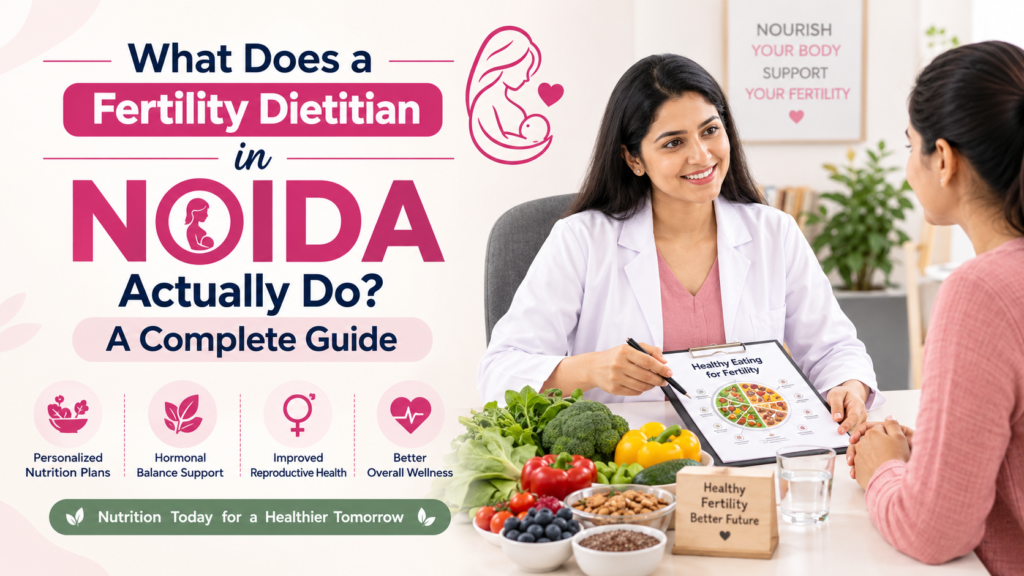
What Does a Fertility Dietitian in Noida Do?
The role of a Fertility Dietitian in Noida generally involves providing individualized nutrition guidance for people preparing for conception or looking to improve their overall dietary habits. But what does a fertility dietitian in Noida actually do?
First, they review the individual’s current eating pattern and lifestyle. This can help identify areas where the diet may lack variety or important nutrients. They may then suggest practical changes based on personal requirements rather than recommending a one-size-fits-all diet.
A fertility dietitian can also develop a Personalized Fertility Diet Plan that considers meal timing, food preferences, dietary restrictions, lifestyle, and nutritional requirements. Weight management may also be discussed when appropriate because both inadequate and excessive weight can be relevant to reproductive health.
Another important part of their role is education. They can explain what foods support fertility, how to build balanced meals, and which dietary habits may be worth limiting. Their recommendations should be realistic enough to follow consistently rather than relying on extreme restrictions.
How Can Nutrition Support Fertility?
Nutrition provides the body with energy and essential nutrients required for normal physiological functions. During the preconception period, maintaining a balanced diet can support overall health and help establish healthy lifestyle habits before pregnancy.
So, can diet improve fertility naturally? Diet cannot guarantee fertility or pregnancy, and nutritional changes cannot correct every cause of infertility. However, a balanced Diet for Fertility can support overall nutritional status and reproductive health.
A well-planned Fertility Diet generally emphasizes vegetables, fruits, whole grains, pulses, legumes, nuts, seeds, healthy sources of protein, and appropriate sources of dietary fats. It also focuses on adequate hydration and limiting excessive intake of highly processed foods.
Nutrition may be particularly useful when dietary habits are inconsistent or when nutritional gaps exist. A Fertility Nutritionist in Noida can help translate general nutrition principles into meals and routines that fit an individual’s lifestyle.
Key Nutrients for Fertility
1. Folate
Folate is an important B vitamin involved in cell division and normal body functions. It is particularly important during the period before and during early pregnancy. Natural food sources include leafy green vegetables, legumes, citrus fruits, and fortified foods. A fertility-focused nutrition plan can help individuals identify dietary sources of folate and discuss supplementation with their healthcare provider when appropriate.
2. Iron
Iron supports the production of hemoglobin and helps transport oxygen throughout the body. Women planning pregnancy should pay attention to adequate iron intake because nutritional needs can change during pregnancy. Foods such as lentils, beans, leafy greens, lean meats, and fortified cereals can contribute to iron intake. Individual requirements vary, so supplementation should be based on professional advice rather than self-prescribing.
3. Omega-3 Fatty Acids
Omega-3 fatty acids are commonly associated with overall heart and metabolic health and are an important component of a balanced diet. Dietary sources include fatty fish, walnuts, chia seeds, and flaxseeds. Including appropriate sources of healthy fats can make a fertility-friendly eating pattern more nutritionally balanced. Individuals following vegetarian or vegan diets can discuss suitable plant-based sources with a nutrition professional.
4. Vitamin D
Vitamin D contributes to bone health, immune function, and several processes within the body. Vitamin D status can vary between individuals depending on diet, sunlight exposure, lifestyle, and other factors. Foods such as fortified dairy or plant-based alternatives, eggs, and fatty fish may contribute to intake. If deficiency is suspected, testing and supplementation should be discussed with a qualified healthcare professional.
5. Zinc
Zinc is an essential mineral involved in numerous biological processes, including normal immune function and cell metabolism. Sources include legumes, nuts, seeds, whole grains, dairy products, eggs, and meat. Maintaining adequate zinc intake is part of good overall nutrition for both men and women. A balanced diet can usually provide many essential nutrients, while individual supplementation needs should be professionally evaluated.
6. Antioxidants
Fruits and vegetables provide a wide range of antioxidant compounds and other beneficial nutrients. Berries, citrus fruits, leafy greens, tomatoes, colorful vegetables, nuts, and seeds can add variety to the diet. Rather than relying on a single “fertility food,” a diverse diet containing different plant foods provides a broader range of nutrients. A fertility dietitian can help create practical ways to increase this variety.
Read Also – Top Reasons to Consult the Best Fertility Dietician in Gurgaon
Fertility-Friendly Foods to Include
1. Leafy Green Vegetables
Spinach, fenugreek leaves, kale, and other leafy greens can be valuable additions to a Fertility-Friendly Diet. They provide nutrients such as folate, fiber, vitamins, and minerals. Including different vegetables throughout the week can improve dietary variety. They can be added to curries, salads, soups, smoothies, or simple vegetable dishes, making them easy to incorporate into everyday meals.
2. Berries and Colorful Fruits
Berries, oranges, guava, apples, and other colorful fruits provide vitamins, minerals, fiber, and naturally occurring plant compounds. Choosing whole fruits instead of relying heavily on juices can also increase fiber intake. There is no single fruit that guarantees improved fertility. Instead, the goal should be to include a variety of fruits as part of an overall balanced Fertility Diet.
3. Nuts and Seeds
Almonds, walnuts, chia seeds, flaxseeds, pumpkin seeds, and other nuts and seeds provide healthy fats, protein, fiber, and several micronutrients. They can be added to breakfast bowls, salads, yogurt, or snacks. Portion size is important because nuts and seeds are energy-dense. A nutrition professional can help determine suitable portions according to individual dietary needs and overall health goals.
4. Whole Grains
Oats, brown rice, quinoa, whole wheat, millet, and other whole grains can provide carbohydrates, fiber, vitamins, and minerals. Replacing some refined grains with whole-grain options can make meals more nutrient-dense. Whole grains can also be combined with vegetables and protein sources to create balanced meals. The most suitable choices depend on dietary preferences, tolerance, and individual nutritional requirements.
5. Pulses and Legumes
Lentils, chickpeas, kidney beans, black beans, and other legumes are useful sources of plant-based protein, fiber, folate, iron, and other nutrients. They can be incorporated into Indian meals through dal, chana, rajma, sprouts, or mixed-legume dishes. Regularly including legumes can add nutritional variety without requiring complicated recipes. They can be particularly useful for individuals following vegetarian diets.
6. Eggs and Quality Protein Sources
Eggs, dairy products, fish, poultry, tofu, paneer, and legumes can contribute to adequate protein intake. Protein is important for maintaining body tissues and supporting normal physiological functions. A balanced Fertility Diet Plan should consider overall protein quality and variety rather than focusing on one particular food. Individual dietary choices may differ based on vegetarian preferences, allergies, cultural habits, and health requirements.
Dietary Mistakes to Avoid
1. Following Extreme Restrictive Diets
Very restrictive diets can make it difficult to obtain adequate calories, protein, vitamins, minerals, and healthy fats. Eliminating entire food groups without a valid reason may also reduce dietary variety. People trying to conceive may sometimes follow internet trends or highly restrictive plans believing they will quickly improve fertility. A balanced approach is generally more sustainable and can better support overall nutritional needs.
2. Depending on “Fertility Superfoods”
There is no single food that can guarantee conception. Foods such as seeds, berries, or specific fruits can certainly be nutritious, but focusing excessively on one so-called superfood can distract from the importance of an overall balanced eating pattern. A healthy Fertility Diet should emphasize variety, adequate nutrition, appropriate portions, and sustainable eating habits rather than miracle foods.
3. Skipping Meals Frequently
Irregular eating patterns may make it harder for some people to maintain consistent energy intake and balanced nutrition. Frequently skipping meals can also lead to excessive hunger and poor food choices later in the day. Instead of following rigid meal schedules, individuals can focus on consistent, balanced meals and snacks according to their lifestyle and nutritional needs.
4. Excessive Processed Foods
Highly processed foods can sometimes be high in added sugars, sodium, unhealthy fats, or calories while providing fewer essential nutrients. This does not mean every packaged food needs to be completely eliminated. The goal should be to make nutrient-dense whole or minimally processed foods the foundation of the diet while keeping highly processed options moderate.
5. Taking Supplements Without Professional Advice
Many fertility supplements are promoted online with claims that may sound convincing but are not appropriate for everyone. Taking excessive amounts of certain vitamins or minerals can be harmful. Supplements should be considered based on individual nutritional needs, medical history, laboratory findings, and professional guidance. A fertility dietitian can help identify dietary gaps, while supplementation decisions may require coordination with a healthcare provider.
When Should You Consult a Fertility Dietitian?
So, when should you see a fertility dietitian? There is no single situation that applies to everyone. Nutrition guidance may be useful when you are planning pregnancy and want to improve your overall eating habits or understand how your diet fits into your preconception goals.
You may also consider consulting a fertility nutrition professional if your current diet is highly restrictive, you have difficulty maintaining a balanced eating pattern, or you want help developing a structured Fertility Diet Plan.
A consultation can also be helpful when nutritional concerns exist alongside a fertility treatment plan. In such situations, the dietitian can provide nutrition guidance while the medical aspects of fertility are managed by the appropriate healthcare professionals.
When should I consult a fertility dietitian? Consider professional guidance when you want personalized recommendations rather than generic online diet advice. It can be especially useful for understanding your nutritional requirements and creating realistic meal strategies.
It is also important to remember that fertility concerns can have many causes. Nutrition should therefore complement, not replace, appropriate medical evaluation and treatment.
Read Also – How Can Fertility Nutrition in Gurgaon Improve Your Chances of Pregnancy?
Frequently Asked Questions
What does a fertility dietitian do?
A fertility dietitian assesses eating habits and nutritional needs and provides personalized nutrition guidance for individuals planning pregnancy or focusing on reproductive health. They may identify nutritional gaps, recommend balanced food choices, and develop a personalized meal plan according to individual requirements.
How can a fertility dietitian help?
A fertility dietitian can help you understand how your current eating pattern fits your nutritional goals. They can suggest nutrient-rich foods, address dietary gaps, support healthy lifestyle habits, and create a Personalized Fertility Diet Plan based on your preferences and requirements.
Can diet improve fertility naturally?
A balanced diet can support overall health and nutritional status, but diet alone cannot guarantee pregnancy or treat every cause of infertility. Fertility can be affected by multiple factors, so appropriate medical evaluation should be considered when conception is difficult.
What foods support fertility?
A varied diet containing vegetables, fruits, whole grains, pulses, legumes, nuts, seeds, healthy fats, and suitable protein sources can support overall nutritional health. There is no single food proven to guarantee fertility, so dietary variety and balance are more important than focusing on one specific food.
Does fertility nutrition apply to men too?
Yes. Fertility Nutrition can apply to both men and women. Men can also benefit from maintaining a balanced diet that provides adequate protein, healthy fats, vitamins, minerals, and other nutrients. Individual recommendations should be based on dietary habits, lifestyle, and personal nutritional requirements.
What happens during a fertility diet consultation?
A consultation may involve discussing your current diet, lifestyle, food preferences, dietary restrictions, health goals, and nutritional concerns. Based on this information, a professional may provide practical recommendations and develop a suitable nutrition strategy or meal plan.
Can a fertility dietitian provide a personalized meal plan?
Yes. A fertility dietitian can create a Personalized Fertility Diet Plan based on individual nutritional needs, food preferences, lifestyle, dietary restrictions, and fertility goals. The plan should be realistic and flexible enough to follow consistently.
Conclusion
A Fertility Dietitian in Noida can play an important role in helping individuals understand their nutritional needs while preparing for conception. From assessing current eating habits and identifying nutritional gaps to creating a Fertility-Friendly Diet and personalized meal strategy, professional nutrition guidance can make healthy eating more practical and structured.
The goal is not to depend on a single fertility food or restrictive diet, but to develop sustainable habits that support overall health and nutritional well-being. Rupali Nayak can help individuals approach fertility nutrition with personalized guidance based on their dietary needs, preferences, and goals.
If you are looking for the Best Fertility Dietitian in Noida, choosing a professional who focuses on individualized nutrition rather than generic diet recommendations can be an important step toward building a healthier preconception routine.