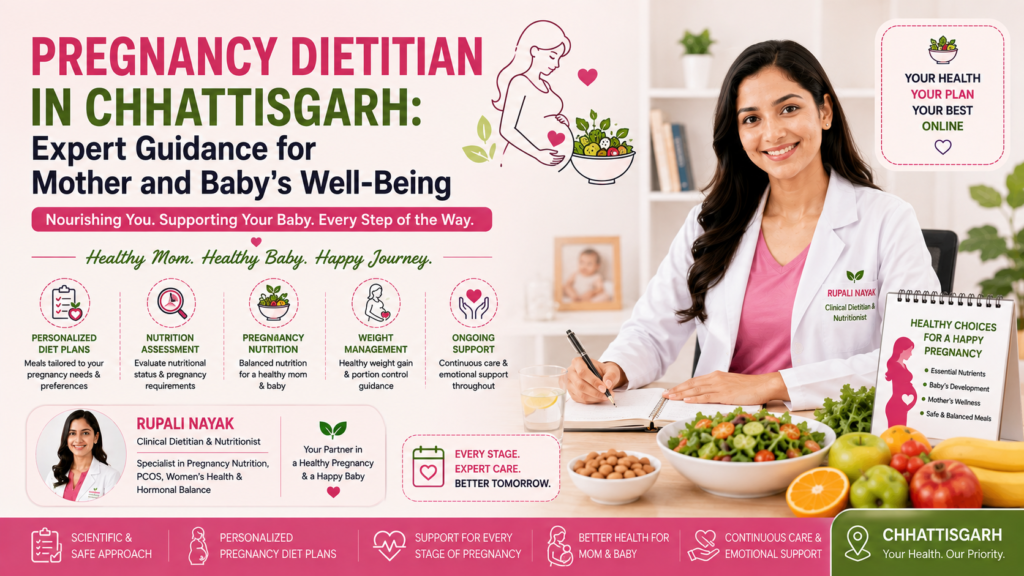
Pregnancy is an important phase when nutrition plays a key role in supporting the mother’s health and the baby’s growth and development. A balanced diet during pregnancy needs to provide adequate nutrients while also fitting the mother’s individual lifestyle, food preferences, and changing nutritional needs.
Consulting a Pregnancy Dietitian in Chhattisgarh can help expectant mothers understand their dietary requirements and make informed food choices. A professional can develop a suitable Pregnancy Diet Plan in Chhattisgarh based on individual needs, pregnancy stage, dietary preferences, and health considerations. Whether you need general pregnancy nutrition guidance or a Personalized Pregnancy Diet Plan, professional support can make healthy eating easier to understand and follow.
Pregnancy Nutrition: Why It Matters
Pregnancy increases the body’s nutritional demands as the baby develops and the mother’s body undergoes significant changes. Proper nutrition can help support energy needs, maternal health, and normal fetal growth.
A balanced Pregnancy Nutrition Plan generally focuses on obtaining essential nutrients from a variety of foods. Protein, iron, folate, calcium, vitamin D, iodine, fiber, healthy fats, and adequate fluids are among the nutrients that may require particular attention during pregnancy.
However, nutritional requirements can vary from one person to another. Factors such as age, pre-pregnancy nutritional status, activity level, dietary preferences, pregnancy stage, and existing health conditions may influence dietary recommendations.
This is why a Healthy Pregnancy Diet Plan should not simply be copied from the internet. Professional guidance can help ensure that dietary choices are practical, balanced, and appropriate for individual circumstances.
Nutrition during pregnancy is also closely connected with overall lifestyle. Along with a balanced diet, appropriate physical activity, adequate rest, hydration, and regular prenatal care contribute to maternal well-being.
Choosing the Right Pregnancy Dietitian
Finding the Best Pregnancy Dietitian in Chhattisgarh involves looking at qualifications, experience, communication, and the ability to provide personalized guidance.
Check Qualifications and Experience
Before choosing a Dietitian for Pregnancy in Chhattisgarh, check the professional’s educational qualifications and relevant experience. Pregnancy nutrition has specific considerations, so it is helpful to work with someone who understands the nutritional needs associated with different stages of pregnancy.
Look for a Personalized Approach
Every pregnancy is different. A suitable professional should consider dietary preferences, lifestyle, nutritional requirements, food tolerances, and health goals before preparing recommendations. A Personalized Pregnancy Diet Plan should be designed around the individual’s circumstances rather than following one standard meal chart for everyone.
Consider Communication and Follow-Ups
Nutrition needs may change throughout pregnancy. Regular follow-ups can provide opportunities to discuss dietary challenges and make appropriate adjustments. Clear communication is especially important if you have questions about foods, supplements, meal timing, hydration, or changes in appetite.
Understand the Consultation Process
Before beginning, ask how the consultation works, what information will be assessed, whether follow-ups are included, and how the diet plan will be shared. This can help you choose a Best Dietitian in Chhattisgarh for Pregnancy whose consultation style matches your needs.
Look for Evidence-Based Guidance
Avoid professionals or programs that make unrealistic promises. Pregnancy nutrition should focus on balanced dietary choices and appropriate professional guidance rather than extreme restrictions, unnecessary food elimination, or guaranteed outcomes.
Essential Nutrients for Mother & Baby
1. Protein
Protein is an important nutrient during pregnancy because it supports the growth and development of maternal tissues and the developing baby. Sources can include pulses, beans, dairy products, eggs, lean meats, fish that are considered safe during pregnancy, nuts, and seeds. Individual protein requirements vary, so a Pregnancy Nutritionist in Chhattisgarh can help personalize dietary recommendations.
2. Folic Acid
Folate is particularly important during early pregnancy because it supports normal development of the baby’s neural tube. Green leafy vegetables, legumes, citrus fruits, and fortified foods can provide folate. Healthcare professionals commonly recommend folic acid supplementation during pregnancy, but the appropriate supplement and dose should be discussed with the treating healthcare provider.
3. Iron
Iron is essential for producing hemoglobin and supporting increased blood volume during pregnancy. Iron-rich foods may include legumes, leafy greens, fortified foods, meat, and other suitable sources. Vitamin C-rich foods can support iron absorption from plant sources. If iron deficiency is suspected, dietary changes should be discussed with a healthcare professional.
4. Calcium
Calcium supports the development of the baby’s bones and teeth while also contributing to the mother’s bone health. Dairy products, fortified alternatives, tofu made with calcium, and certain leafy vegetables can provide calcium. Individual needs can vary, particularly for people with dietary restrictions, so personalized guidance can help identify suitable food sources.
5. Vitamin D
Vitamin D contributes to bone health and calcium metabolism. Food sources may include fortified foods, eggs, and certain fish, while sunlight exposure can also contribute to vitamin D status. Supplementation may be recommended in some cases based on individual requirements. Pregnant women should discuss supplements with their healthcare provider rather than self-prescribing.
6. Iodine
Iodine supports the production of thyroid hormones, which are important during pregnancy for normal growth and development. Sources may include iodized salt and certain dairy products and seafood. Because iodine requirements can vary and excessive intake can also be problematic, dietary and supplement decisions should be discussed with a qualified healthcare professional.
7. Healthy Fats
Healthy fats provide energy and support various bodily functions. Sources such as nuts, seeds, avocados, and suitable plant oils can contribute to a balanced diet. Omega-3 fatty acids are also relevant to pregnancy nutrition. Food choices should consider pregnancy food-safety recommendations, particularly when selecting fish and seafood.
8. Fiber and Hydration
Fiber can support digestive health, which may be particularly useful when constipation occurs during pregnancy. Fruits, vegetables, whole grains, pulses, nuts, and seeds are common sources. Adequate fluid intake is also important. Individual hydration needs can vary depending on activity, weather, health, and pregnancy-related factors.
Trimester-Wise Diet Guide
1. First Trimester
The first trimester can bring nausea, vomiting, food aversions, and changes in appetite. Smaller, more frequent meals may be easier for some women to tolerate. Nutrient-rich foods and adequate hydration remain important. Folic acid is particularly relevant during early pregnancy, and supplement recommendations should be followed according to guidance from the treating healthcare professional.
2. Second Trimester
During the second trimester, appetite may change as some early pregnancy symptoms improve. A balanced diet containing protein, whole grains, vegetables, fruits, healthy fats, and suitable dairy or alternatives can support increasing nutritional needs. A Healthy Pregnancy Diet Plan should remain flexible enough to accommodate changing appetite and individual nutritional requirements.
3. Third Trimester
The third trimester is a period of continued fetal growth and increasing maternal nutritional demands. Meals can focus on nutrient-dense foods, adequate protein, fiber, fluids, and other essential nutrients. Smaller meals may be more comfortable for some women because of physical discomfort or reduced stomach space. Individual recommendations should be based on professional guidance.
4. Adapting Meals to Changing Needs
Pregnancy is not nutritionally identical from beginning to end. Food preferences, appetite, energy levels, and physical comfort can change. A Customized Pregnancy Diet Plan can be adjusted according to trimester, dietary preferences, nutritional requirements, and guidance from the healthcare team, making it more practical than following one fixed diet throughout pregnancy.
Foods to Eat & Avoid
1. Nutrient-Dense Foods
A pregnancy diet can include a variety of nutrient-rich foods such as vegetables, fruits, whole grains, pulses, nuts, seeds, dairy or suitable alternatives, eggs, and appropriate protein sources. Variety helps provide different nutrients and can make meals more enjoyable. The exact food choices should reflect individual preferences, dietary patterns, allergies, and professional recommendations.
2. Protein-Rich Foods
Protein-rich foods can be included throughout pregnancy to support increased nutritional needs. Suitable options may include lentils, beans, chickpeas, dairy products, eggs, nuts, seeds, and properly cooked lean meats or fish. Food safety is important, so animal products should be prepared appropriately and selected according to pregnancy-specific safety guidance.
3. Fruits and Vegetables
Fruits and vegetables provide fiber, vitamins, minerals, and other beneficial nutrients. A variety of colors can help increase dietary diversity. Produce should be washed properly before consumption, particularly when eaten raw. Including vegetables and fruits across meals can help create a balanced Pregnancy Diet Plan while supporting overall dietary quality.
4. Foods to Avoid or Limit
Certain foods and beverages require caution during pregnancy because of foodborne infection risks, mercury exposure, or other concerns. Examples can include unpasteurized products, undercooked meat or eggs, certain high-mercury fish, and alcohol. Caffeine intake may also need to be limited. Specific recommendations should be discussed with your obstetrician or qualified healthcare professional.
5. Raw and Undercooked Foods
Raw or undercooked animal products can carry harmful microorganisms. Pregnant women are generally advised to take particular care with food preparation and hygiene. Meat, eggs, and seafood should be cooked appropriately, and cross-contamination should be avoided. Following established pregnancy food-safety recommendations can reduce avoidable risks.
6. Unpasteurized Foods
Unpasteurized milk and certain dairy products may carry bacteria that can cause serious infections during pregnancy. Choosing pasteurized dairy products is generally recommended. When purchasing packaged foods, checking labels can help identify whether products have been pasteurized. If you are uncertain about a particular product, consult your healthcare provider.
7. High-Mercury Fish
Fish can provide valuable nutrients, including protein and omega-3 fatty acids, but some fish contain higher levels of mercury. Pregnancy nutrition guidance should therefore distinguish between safer fish choices and fish that should be avoided or limited. Follow current recommendations from your healthcare provider or recognized food-safety authority when choosing seafood.
8. Alcohol and Excessive Caffeine
Alcohol should be avoided during pregnancy because there is no established safe level of alcohol consumption during pregnancy. Caffeine intake should also be kept within limits recommended by healthcare authorities. Coffee, tea, energy drinks, chocolate, and some medications may contain caffeine, so total daily intake should be considered.
Personalized Pregnancy Diet Plans
A Personalized Pregnancy Diet Plan is designed around an individual’s nutritional requirements rather than providing the same meal chart to every expectant mother.
A professional may consider factors such as pregnancy stage, food preferences, dietary pattern, lifestyle, appetite, nutritional status, activity level, and relevant health information. The resulting plan can provide practical meal ideas, food alternatives, portion guidance, hydration strategies, and suggestions for maintaining nutritional balance.
A Pregnancy Diet Plan in Chhattisgarh can also be adapted to local food preferences and commonly available ingredients. This can make healthy eating more familiar and practical for families.
Personalization is especially useful when someone follows a vegetarian diet, has food allergies or intolerances, experiences pregnancy-related nausea, or has specific nutritional concerns. However, pregnancy-related medical conditions require coordination with the treating healthcare team.
A Pregnancy Nutrition Plan should complement regular prenatal healthcare rather than replace it. If you have concerns such as severe vomiting, significant nutritional deficiencies, gestational diabetes, high blood pressure, or other pregnancy complications, discuss them promptly with your obstetrician or healthcare provider.
Frequently Asked Questions
Who is the best pregnancy dietitian in Chhattisgarh?
The Best Pregnancy Dietitian in Chhattisgarh depends on your individual requirements, pregnancy stage, dietary preferences, and health goals. Consider qualifications, relevant experience, personalized planning, communication, follow-up support, and coordination with your healthcare team when making a choice.
How do I choose a pregnancy dietitian in Chhattisgarh?
Check the professional’s qualifications, pregnancy-nutrition experience, consultation process, personalization approach, and follow-up support. It is also useful to ask how they adapt recommendations for different pregnancy stages and dietary preferences.
What should I eat during pregnancy?
A balanced pregnancy diet can include vegetables, fruits, whole grains, pulses, suitable protein sources, dairy or alternatives, healthy fats, and adequate fluids. Specific foods and portions should be personalized according to individual nutritional requirements and guidance from your healthcare team.
What is the best diet during pregnancy?
There is no single diet that is best for every pregnant woman. A suitable pregnancy diet should provide a variety of essential nutrients and be adapted to individual nutritional requirements, food preferences, pregnancy stage, and health circumstances.
What foods are important during pregnancy?
Important nutrients during pregnancy include protein, folate, iron, calcium, vitamin D, iodine, healthy fats, fiber, and fluids. A varied diet containing nutrient-rich foods can help meet nutritional needs, while supplements should be taken according to professional healthcare advice.
What foods should be avoided during pregnancy?
Foods that may pose food-safety or other risks during pregnancy include alcohol, unpasteurized products, undercooked animal foods, and certain high-mercury fish. Caffeine should also be limited according to healthcare guidance. Always check current recommendations with your obstetrician or healthcare provider.
How much protein is needed during pregnancy?
Protein needs increase during pregnancy, but the appropriate amount depends on individual factors such as body size, activity level, dietary pattern, and overall health. Rather than following a universal number without context, discuss your specific protein requirement with your dietitian and healthcare provider.
Can a pregnancy dietitian replace my doctor?
No. A dietitian provides nutrition guidance, while an obstetrician or other healthcare professional manages medical aspects of pregnancy. Nutrition support should complement regular prenatal care, particularly when complications or medical conditions are present.
Conclusion
Choosing the right Pregnancy Dietitian in Chhattisgarh can help expectant mothers understand their changing nutritional needs and develop healthier eating habits throughout pregnancy. A balanced and personalized approach can make it easier to include essential nutrients while considering individual food preferences, lifestyle, and pregnancy stage.
For mothers looking for personalized pregnancy nutrition and wellness guidance, Rupali Nayak can be considered for professional dietary support tailored to individual requirements. With the right nutrition guidance alongside regular prenatal care, mothers can make informed food choices and support their own well-being as well as their baby’s healthy development.