Finding the Best Dietitian for PCOS in Delhi can be an important step for women looking to improve their nutrition, manage weight, and build healthier daily habits. Polycystic Ovary Syndrome (PCOS) can affect metabolism, menstrual health, weight management, and overall well-being, so dietary needs may differ from one person to another.
A qualified PCOS Dietitian in Delhi can understand an individual’s lifestyle, food preferences, goals, and nutritional requirements before developing an appropriate approach. Instead of following a generic diet from the internet, personalized nutrition guidance can make healthy eating more practical and sustainable.
Choosing the right professional also involves looking at qualifications, experience, consultation methods, personalization, communication, and the ability to create realistic dietary strategies. Whether you need support with weight management, PCOS-friendly eating, or long-term lifestyle changes, selecting the right nutrition expert can make the process easier to follow.
What Does a PCOS Dietitian Do?
A PCOS dietitian focuses on nutrition strategies that can support women living with PCOS. The role is not simply to provide a list of foods. A qualified professional first considers factors such as lifestyle, eating patterns, activity level, personal goals, food preferences, and existing nutritional concerns.
A Dietitian for PCOS in Delhi may help create an eating pattern that supports balanced nutrition while fitting into everyday life. Depending on individual needs, dietary guidance may focus on adequate protein, fiber-rich foods, balanced carbohydrates, healthy fats, hydration, meal timing, and appropriate portion sizes.
A PCOD Dietitian in Delhi may similarly provide nutrition guidance for women using the terms PCOD and PCOS interchangeably. The exact dietary approach should still be personalized rather than based on a one-size-fits-all plan.
A professional may also monitor progress and make adjustments when required. This can make a PCOS diet consultation more useful than simply downloading a standard diet chart.
What Does a PCOS Dietitian Do?
A PCOS dietitian generally helps clients understand how everyday food choices fit into their overall nutrition goals. They can assess current eating habits, identify areas that may need improvement, and develop practical recommendations.
The goal is to create a sustainable PCOS nutrition plan rather than an extremely restrictive diet. Good nutrition guidance should be realistic enough to continue over the long term.
READ ALSO – How to Choose the Best Dietitian for PCOS in Gurgaon: Complete Guide
Why Choose a Personalized PCOS Diet Plan?
1. Your Nutritional Needs Are Individual
Every woman with PCOS can have different nutritional needs, lifestyle habits, food preferences, and health goals. A Personalized PCOS diet plan considers these differences instead of applying the same meal plan to everyone. Personalization can make dietary recommendations more practical because meals, portions, food choices, and routines can be adjusted according to the individual’s lifestyle and everyday eating habits.
2. It Can Fit Your Daily Lifestyle
A diet plan becomes difficult to maintain when it does not match a person’s schedule. A personalized approach can consider working hours, household responsibilities, travel, exercise routines, and meal timings. This allows a Personalized PCOD diet plan to be designed around realistic habits. When recommended meals are convenient and compatible with daily routines, following the nutrition plan can become easier and more sustainable.
3. It Can Respect Food Preferences
Healthy eating does not necessarily mean eliminating all favourite foods. A personalized plan can consider vegetarian or non-vegetarian preferences, commonly available Indian foods, cultural eating patterns, and individual likes or dislikes. Instead of forcing unfamiliar foods into the diet, a nutrition expert can help create balanced meals using foods that a person is comfortable eating and can realistically include in everyday life.
4. It Supports Long-Term Consistency
Extreme diets may be difficult to follow for extended periods. A personalized PCOS nutrition plan focuses on building habits that can become part of a person’s regular lifestyle. The approach may involve improving meal balance, increasing nutrient-dense foods, managing portions, and developing better eating routines. Long-term consistency is generally more practical than repeatedly starting and stopping highly restrictive diet programs.
5. It Can Address Specific Goals
Women may seek dietary support for different reasons, including weight management, improving overall nutrition, developing healthier eating habits, or supporting lifestyle changes associated with PCOS. A personalized plan allows dietary recommendations to be aligned with the individual’s specific goals. This means the nutrition strategy can evolve as progress is monitored rather than remaining a fixed diet chart throughout the entire process.
READ ALSO – Top Benefits of Consulting Best Dietician in Gurgaon for PCOS | Rupali Nayak
How Can a Dietitian Help Manage PCOS?
A qualified Dietitian for PCOS in Delhi can provide structured nutrition guidance based on an individual’s needs and goals. Diet is one part of overall PCOS management, and nutrition guidance can work alongside appropriate medical care, physical activity, sleep, and other healthy lifestyle habits.
Supporting Balanced Eating
A dietitian can help build balanced meals containing appropriate combinations of protein, carbohydrates, healthy fats, fiber, vitamins, and minerals. Balanced meals can help make daily nutrition more consistent while reducing dependence on highly processed food choices.
Supporting Healthy Weight Management
Weight management can be challenging for some women with PCOS. A dietitian can help develop a practical eating strategy based on individual requirements rather than recommending crash diets. If weight loss is an appropriate personal goal, nutrition guidance can focus on sustainable dietary and lifestyle habits.
Improving Meal Quality
A nutrition professional can review existing eating habits and identify opportunities to improve meal quality. This may include adding more vegetables, fruits, whole grains, legumes, protein sources, nuts, seeds, and other nutrient-rich foods according to individual dietary preferences.
Building Sustainable Habits
Successful nutrition is not only about what someone eats for a few weeks. It is also about developing habits that can continue over time. A PCOS diet counselling session can help identify practical changes that fit into everyday life and can be maintained consistently.
Providing Ongoing Guidance
Dietary needs and lifestyle circumstances can change. Follow-up consultations can help review progress, discuss challenges, and adjust the PCOS diet plan when appropriate. This ongoing approach can be particularly useful for people who find it difficult to stay consistent when following a diet independently.
It is important to remember that nutrition guidance does not replace medical diagnosis or treatment. Women with PCOS should seek appropriate medical advice for symptoms, medications, fertility concerns, or other health conditions.
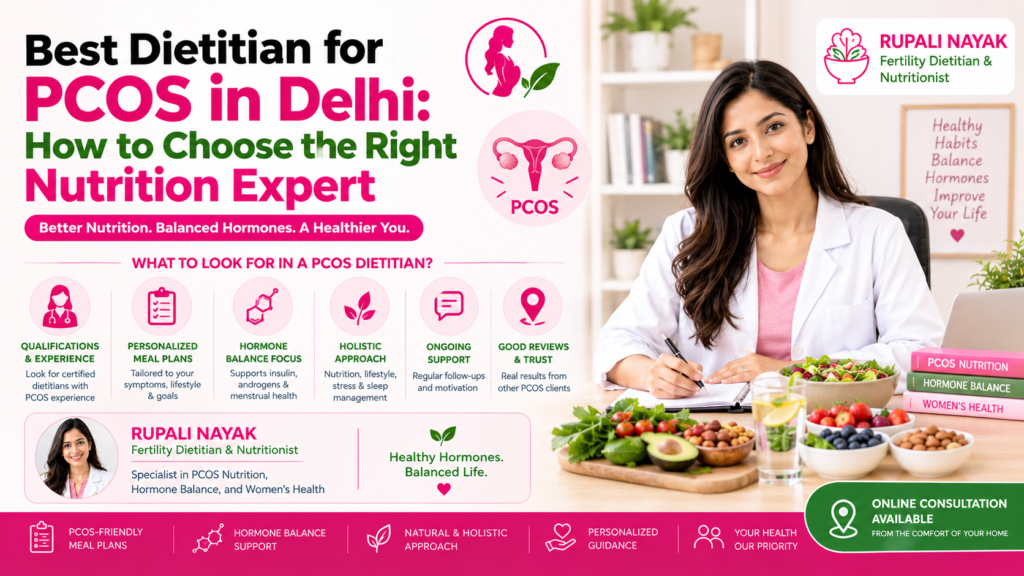
What to Look for in the Best Dietitian for PCOS in Delhi?
Choosing the Best PCOS Dietitian in Delhi should involve more than looking at online ratings or attractive diet plans. Consider the following factors before selecting a professional.
Relevant Qualifications
Check whether the professional has appropriate education and training in dietetics or nutrition. Relevant qualifications provide an important foundation for offering responsible dietary guidance.
Experience With PCOS
PCOS has specific nutritional considerations, so experience with PCOS and related dietary concerns can be valuable. Look for a professional who understands that PCOS nutrition should be individualized rather than based on a single universal diet.
Personalized Approach
Avoid professionals who immediately provide the exact same diet chart to every client. A good PCOS dietitian in Delhi should consider your eating habits, lifestyle, preferences, goals, and nutritional requirements before creating recommendations.
Practical Meal Planning
A good plan should be realistic. Ask whether the professional can work with your regular Indian meals, office schedule, family eating habits, travel routine, and food preferences. Practical recommendations are generally easier to maintain than complicated meal plans requiring unusual ingredients.
Clear Communication
During PCOS diet counselling, you should be able to ask questions and understand why particular dietary recommendations are being made. Clear communication can help you make informed choices and follow the plan more confidently.
Follow-Up Support
Nutrition changes often require time and adjustment. Ask whether follow-up consultations are available and how progress is reviewed. Regular support can help identify challenges and make appropriate changes to the nutrition plan.
Evidence-Based Guidance
Be cautious of professionals who promise instant results or promote extreme food restrictions. A reliable approach should be based on sound nutrition principles and should avoid unrealistic claims.
Online Consultation Availability
For people with busy schedules, an online PCOS diet consultation can offer flexibility. Online consultations may allow individuals to discuss their eating habits and goals without travelling to a clinic, provided the consultation process is properly structured.
Focus on Sustainable Lifestyle Changes
The right professional should help you develop habits that can continue beyond a short-term diet. Look for guidance that emphasizes balanced nutrition, realistic food choices, physical activity, sleep, and overall lifestyle rather than focusing exclusively on rapid weight loss.
PCOS Diet Plan: Foods to Eat and Avoid
1. Include Protein-Rich Foods
Protein can be an important part of a balanced diet. Depending on individual preferences, suitable sources may include eggs, dairy products, paneer, tofu, legumes, lentils, beans, fish, chicken, and other protein-rich foods. Including adequate protein in meals can contribute to overall nutritional balance and may help meals feel more satisfying. Individual protein requirements should be determined according to personal dietary needs.
2. Choose High-Fiber Foods
Fiber-rich foods can contribute to a nutritious eating pattern. Vegetables, fruits, legumes, beans, whole grains, nuts, and seeds can provide dietary fiber along with important vitamins and minerals. Instead of focusing on one “superfood,” a varied diet containing different plant foods can provide a broader range of nutrients and make meals more balanced.
3. Prefer Whole or Minimally Processed Foods
Whole and minimally processed foods can form the foundation of a balanced PCOS diet plan. Vegetables, fruits, whole grains, pulses, legumes, nuts, seeds, and suitable protein sources can be included according to individual preferences. Reducing reliance on highly processed foods can help improve overall diet quality while still allowing flexibility for occasional preferred foods.
4. Include Healthy Sources of Fat
Healthy fats can be included as part of a balanced diet. Foods such as nuts, seeds, avocados, and suitable cooking oils can contribute to overall nutritional intake. The quantity and choice of fats should depend on individual dietary requirements. A balanced approach is more useful than completely eliminating dietary fat from meals.
5. Limit Excessively Sugary Foods and Drinks
Foods and beverages high in added sugars can contribute excess calories while providing limited nutritional value. Soft drinks, sugary beverages, desserts, and frequently consumed sweets may be better limited as part of an overall healthy eating pattern. A personalized plan can help determine how these foods can fit into an individual’s diet without creating unnecessary restrictions.
6. Be Mindful of Highly Processed Foods
Highly processed foods can sometimes contain large amounts of added sugars, sodium, saturated fats, or refined carbohydrates. Regularly relying on such foods may reduce overall diet quality. Instead of completely banning every processed food, a PCOD diet plan can focus on improving the overall balance of meals and prioritizing nutrient-dense options more frequently.
7. Avoid One-Size-Fits-All Food Rules
There is no single food list that works identically for every woman with PCOS. Individual tolerance, dietary preferences, nutritional requirements, lifestyle, and personal goals can differ considerably. Therefore, advice such as completely eliminating carbohydrates or specific food groups should not automatically be applied to everyone. A qualified professional can help determine a suitable dietary approach.
8. Maintain Adequate Hydration
Water is an essential part of everyday nutrition. Staying adequately hydrated supports normal body functions and can be particularly important when combined with regular physical activity. Water can generally be the primary beverage, while the intake of sugary drinks can be limited. Individual hydration needs can vary depending on factors such as activity, climate, and personal circumstances.
9. Focus on Overall Diet Quality
A PCOS-friendly eating pattern should not depend on one specific food, supplement, or “miracle” ingredient. Instead, focus on the overall quality and consistency of meals. A combination of nutrient-rich foods, balanced portions, adequate protein and fiber, appropriate hydration, and sustainable eating habits can create a stronger foundation for long-term nutrition.
10. Avoid Extreme Diet Restrictions
Very restrictive diets can be difficult to sustain and may make healthy eating unnecessarily stressful. Completely eliminating large food groups without professional guidance may also make it harder to meet nutritional needs. A suitable PCOS nutrition plan should prioritize balance, flexibility, and sustainability while being adjusted according to individual requirements.
READ ALSO – Why You Need the Best Dietitian in Gurgaon for PCOS Weight Loss
FAQs
Who is the best dietitian for PCOS in Delhi?
The Best Dietitian for PCOS in Delhi is not necessarily the professional with the most advertisements or the largest social media following. Look for appropriate qualifications, relevant PCOS experience, personalized consultation, evidence-based guidance, practical meal planning, clear communication, and follow-up support.
How can a dietitian help with PCOS?
A dietitian can assess your current eating pattern and help develop a personalized nutrition strategy. They may provide guidance on balanced meals, protein, fiber, food quality, portion sizes, weight management, and sustainable lifestyle habits based on individual requirements.
What does a PCOS dietitian do?
A PCOS dietitian provides nutrition-focused guidance for women with PCOS. This may include assessing dietary habits, understanding personal goals, developing a Personalized PCOS diet plan, monitoring progress, and making adjustments when required.
What should a PCOS diet plan include?
A balanced PCOS diet plan can include appropriate portions of protein-rich foods, vegetables, fruits, whole grains, legumes, healthy fats, nuts, and seeds, depending on individual requirements. Highly processed and heavily sugary foods may be limited. The exact plan should be personalized.
Can a dietitian help with PCOS weight loss?
Yes, a dietitian can provide nutrition guidance for individuals whose goal includes weight management. A sustainable approach generally focuses on balanced eating, appropriate portions, nutrient-dense foods, physical activity, and long-term habits rather than crash dieting.
What foods are good for PCOS?
Nutrient-dense foods such as vegetables, fruits, legumes, whole grains, protein-rich foods, nuts, seeds, and suitable healthy fats can form part of a balanced PCOS eating pattern. The most suitable food choices depend on individual dietary needs and preferences.
What foods should be avoided with PCOS?
There is no universal list of foods that every person with PCOS must completely avoid. However, frequently consuming foods and drinks high in added sugars or highly processed foods may make it harder to maintain an overall nutritious eating pattern. Individual dietary guidance is preferable to unnecessary restrictions.
Conclusion
Choosing the Best Dietitian for PCOS in Delhi means looking beyond a standard diet chart and focusing on qualifications, PCOS experience, personalization, practical meal planning, communication, and ongoing support. A well-designed PCOS diet plan should fit your lifestyle, food preferences, nutritional needs, and personal goals while encouraging sustainable healthy habits.
For women seeking professional nutrition guidance for PCOS, Rupali Nayak can be considered as a nutrition professional offering personalized dietary support. A tailored approach can help make PCOS nutrition more practical, structured, and easier to integrate into everyday life.
The right PCOS Dietitian in Delhi should help you understand your nutritional choices rather than simply giving you a restrictive list of foods. With appropriate professional guidance and a consistent lifestyle approach, nutrition can become an important part of your overall PCOS management strategy.