Good nutrition is one of the foundations of a healthy and active lifestyle. The right combination of foods can support energy levels, healthy weight, immunity, digestion, and overall wellbeing. However, nutritional requirements are different for every person. Age, lifestyle, activity level, food preferences, health goals, and existing health conditions can all influence what an individual needs. Consulting the Best Nutritionist in Chhattisgarh can help you understand your nutritional requirements and follow a practical, personalized approach to healthy eating.
Why Nutrition Matters
Nutrition affects almost every aspect of health. The body requires carbohydrates, proteins, healthy fats, vitamins, minerals, fibre, and fluids to perform its everyday functions. A balanced diet provides these nutrients while helping individuals maintain healthy eating patterns over the long term.
Poor dietary habits, irregular meals, excessive consumption of highly processed foods, and inadequate intake of nutrient-rich foods can make it difficult to meet nutritional needs. On the other hand, a balanced eating pattern can support energy, concentration, physical performance, digestion, and healthy weight management.
A Nutritionist in Chhattisgarh can help individuals understand the difference between simply eating less and eating better. Rather than following restrictive diets, professional nutrition guidance generally focuses on food quality, appropriate portions, meal balance, and sustainable habits.
Nutrition is also closely connected with lifestyle. Sleep, physical activity, hydration, stress, and meal timing can influence overall wellbeing. Therefore, a healthy lifestyle is not based on one particular food or diet trend. It is built through consistent habits that can realistically be maintained.
Whether the goal is healthy weight management, improved eating habits, better fitness nutrition, or general wellness, personalized nutrition guidance can make the process easier to understand and follow.
Benefits of Personalized Diet Plans
1. Nutrition Based on Individual Needs
A personalized diet plan considers factors such as age, lifestyle, activity level, food preferences, nutritional requirements, and health goals. Instead of giving everyone the same diet chart, an individualized approach focuses on what is practical for a particular person. This can make healthy eating easier to follow and more compatible with everyday routines, cultural food preferences, and personal choices.
2. Supports Healthy Weight Management
A personalized nutrition plan can help individuals understand appropriate portions, meal composition, and healthier food choices. Rather than depending on extreme calorie restriction, the focus can be on sustainable eating habits and nutrient-dense foods. When combined with appropriate physical activity, a structured diet may support healthy weight management. Individual goals should always be realistic and based on personal nutritional requirements.
3. Makes Healthy Eating More Sustainable
Many people start diets that are difficult to maintain because they eliminate too many foods or require complicated meal preparation. A personalized plan can include familiar foods while making practical improvements to portions, ingredients, cooking methods, and meal combinations. This flexible approach may make it easier to maintain healthy eating habits over time instead of repeatedly starting and stopping restrictive diets.
4. Helps Improve Meal Planning
Planning meals in advance can reduce dependence on unhealthy convenience foods and make balanced eating more manageable. A customized plan can provide ideas for breakfast, lunch, dinner, and snacks based on individual schedules and preferences. It can also help people understand how to combine carbohydrates, protein, vegetables, healthy fats, and fibre to create more balanced meals.
5. Addresses Specific Nutritional Goals
Different people may seek nutrition guidance for different reasons. Someone may want to improve general eating habits, while another person may focus on weight management, fitness, pregnancy nutrition, diabetes management, or another specific goal. A personalized approach allows food choices and meal patterns to be aligned with the individual’s objectives while considering relevant health and lifestyle factors.
6. Improves Understanding of Food Choices
Professional nutrition guidance can help individuals understand food labels, portion sizes, cooking methods, nutrient density, and healthier alternatives. This knowledge can be more valuable than simply receiving a diet chart because it enables people to make better food decisions independently. Over time, improved nutrition awareness can help individuals manage meals at home, at work, while travelling, or when eating outside.
7. Helps Build Long-Term Healthy Habits
The purpose of a good diet plan should not be limited to short-term results. Sustainable nutrition focuses on habits that can continue for months and years. A personalized plan can gradually introduce improvements such as eating more vegetables, increasing fibre intake, choosing better protein sources, improving hydration, and reducing excessive processed foods. Small, consistent changes can contribute to a healthier lifestyle.
Who Needs Nutrition Guidance?
Nutrition guidance is not limited to people who want to lose weight. Almost anyone can benefit from understanding their nutritional requirements and improving everyday eating habits.
People with busy lifestyles may seek professional guidance to organize meals and avoid frequent dependence on processed or fast foods. Individuals involved in sports or regular exercise may require help with protein, energy, hydration, and meal timing. People looking to manage their weight may benefit from learning about appropriate portions and balanced meals.
Nutrition guidance can also be useful for individuals who have specific dietary preferences, such as vegetarian or vegan diets, and want to ensure that their meals provide adequate nutrients.
Parents may seek professional guidance for children’s nutrition, while adults may want to improve their eating habits as part of a healthier lifestyle. Older adults may also require individualized dietary support based on changing nutritional requirements.
People managing certain health conditions may require specialized nutrition advice alongside medical treatment. In such cases, nutrition should be coordinated with the treating healthcare professional rather than used as a replacement for medical care.
If you are unsure whether professional guidance is appropriate, a Nutritionist Chhattisgarh consultation can help assess your dietary habits and determine whether a personalized nutrition approach may be beneficial.
Healthy Foods & Eating Habits
1. Include More Vegetables
Vegetables are important sources of fibre, vitamins, minerals, and various plant compounds. Including different colours and varieties can increase dietary diversity. Leafy greens, carrots, tomatoes, beans, cauliflower, broccoli, capsicum, and seasonal vegetables can be incorporated into everyday meals. Instead of relying on one particular “superfood,” focus on eating a variety of vegetables regularly as part of a balanced overall diet.
2. Choose Protein-Rich Foods
Protein contributes to muscle maintenance, tissue repair, and overall nutritional balance. Suitable sources can include pulses, beans, lentils, eggs, dairy products, paneer, tofu, fish, poultry, nuts, and seeds, depending on dietary preferences. Including a protein source in meals can also make food more satisfying. The appropriate quantity varies according to age, activity level, health goals, and individual nutritional requirements.
3. Prefer Whole and High-Fibre Foods
Whole grains, legumes, vegetables, fruits, nuts, and seeds can contribute valuable dietary fibre. Fibre supports digestive health and can help meals feel more filling. Foods such as oats, whole wheat, barley, brown rice, beans, and lentils can be incorporated according to individual preferences. Choosing minimally processed foods more often can improve overall dietary quality without requiring extreme dietary restrictions.
4. Eat Whole Fruits
Whole fruits can provide fibre, vitamins, minerals, and naturally occurring antioxidants. Apples, guava, oranges, bananas, berries, pears, papaya, and other seasonal fruits can be included in a balanced diet. Whole fruits are generally preferable to sugary fruit beverages because they retain their fibre and tend to be more filling. Portion sizes can be adjusted according to individual nutritional and health needs.
5. Include Healthy Fats
Healthy fats are an important part of a balanced eating pattern. Nuts, seeds, avocados, and suitable plant oils can provide unsaturated fats and other nutrients. Fat is energy-dense, so portion awareness is still important. Instead of eliminating fats completely, focus on choosing healthier sources and maintaining an appropriate balance between fats, carbohydrates, and protein according to individual requirements.
6. Stay Adequately Hydrated
Water is essential for normal body functions and should generally be the primary source of hydration. Individual fluid requirements can vary depending on climate, activity, diet, age, and health circumstances. Replacing frequent sugary beverages with water or suitable unsweetened options can reduce unnecessary sugar and calorie intake. People with specific medical conditions should follow their healthcare provider’s recommendations regarding fluid intake.
7. Practice Portion Control
Healthy food can still contribute excessive calories when consumed in very large portions. Portion control helps create balance without requiring individuals to completely eliminate favourite foods. A practical plate can include vegetables, a suitable protein source, and an appropriate portion of carbohydrate-rich foods. Portion requirements vary, so personalized guidance can help determine what works best for an individual’s lifestyle and goals.
8. Limit Highly Processed Foods
Packaged snacks, sugary beverages, sweets, refined bakery products, and heavily processed foods can be high in added sugar, sodium, unhealthy fats, or calories. They do not necessarily need to be completely eliminated, but frequent consumption can reduce overall dietary quality. A healthier approach is to make minimally processed, nutrient-rich foods the foundation of everyday meals while keeping highly processed choices occasional.
How a Nutritionist Can Help
A nutritionist can provide more than a basic diet chart. The first step is generally understanding an individual’s current eating habits, lifestyle, goals, preferences, and nutritional concerns. Based on this information, an appropriate nutrition strategy can be developed.
A Best Dietitian in Chhattisgarh may help with meal planning, portion guidance, food substitutions, healthy cooking methods, and practical strategies for maintaining a balanced diet. Depending on the individual’s goals, the plan may focus on healthy weight management, general wellness, sports nutrition, or other nutrition-related needs.
Personalized Meal Planning
A professional can help create a meal structure that fits an individual’s schedule. This may include breakfast, lunch, snacks, and dinner options that are practical to prepare and suitable for personal food preferences.
Weight Management Support
People often struggle with conflicting information about weight loss and dieting. Nutrition guidance can help replace extreme approaches with sustainable eating habits, appropriate portions, and realistic goals.
Nutrition Education
Understanding why certain foods are included or limited can make dietary changes easier to maintain. A nutrition professional can explain carbohydrates, protein, fats, fibre, vitamins, minerals, food labels, and portion sizes in simple terms.
Lifestyle Integration
Healthy eating works best when it fits into everyday life. A nutritionist can help adapt meal plans around work schedules, exercise routines, travel, social occasions, and family eating patterns.
Monitoring and Adjustments
Nutritional needs and goals can change over time. Follow-up consultations can help review progress and make adjustments where appropriate. This makes personalized nutrition more flexible than following a fixed diet chart indefinitely.
People searching for a Nutritionist consultation in Chhattisgarh or Dietitian consultation in Chhattisgarh should look for a qualified professional who provides evidence-based guidance and avoids unrealistic promises.
Choosing the Best Nutritionist in Chhattisgarh
Choosing the Best Nutritionist in Chhattisgarh should involve more than selecting someone based on social media popularity or claims of rapid results. Nutrition is highly individual, and a good professional should focus on practical, evidence-based recommendations.
First, consider the professional’s qualifications and experience. Look for someone who understands nutritional science and has experience addressing goals similar to yours.
Second, check whether the professional offers personalized plans. A generic diet chart may not account for your lifestyle, food preferences, schedule, nutritional requirements, or health considerations.
Third, consider the consultation process. A good nutrition consultation should involve questions about your current eating pattern, daily routine, activity level, food preferences, goals, and relevant health information.
Fourth, be cautious of professionals who promise guaranteed weight loss, instant results, or permanent solutions through a single food or supplement. Sustainable nutrition generally requires consistency rather than extreme measures.
Finally, consider follow-up support. Dietary habits often require adjustment as circumstances change. A professional who provides ongoing guidance can help make the plan more practical over time.
If you are searching online for the Best dietitian in Chhattisgarh, Dietitian in Chhattisgarh, or Dietician in Chhattisgarh, prioritize qualifications, personalized care, realistic recommendations, and a sustainable approach.
FAQs
Who is the best nutritionist in Chhattisgarh?
The best nutritionist depends on your individual needs, goals, dietary preferences, and the type of guidance you require. Look for a qualified professional who offers personalized nutrition plans, evidence-based recommendations, realistic goals, and appropriate follow-up support rather than relying only on claims of quick results.
What does a nutritionist do?
A nutritionist helps individuals understand their nutritional requirements and develop healthier eating habits. Depending on their qualifications and scope of practice, they may provide guidance on meal planning, food choices, portion sizes, healthy eating, weight management, and lifestyle nutrition.
Why should I consult a nutritionist?
You may consult a nutritionist if you need help improving your eating habits, managing weight, planning balanced meals, meeting specific nutritional goals, or understanding appropriate food choices. Personalized guidance can make healthy eating more practical and sustainable than following generic diet trends.
What is a personalized diet plan?
A personalized diet plan is a nutrition strategy designed around an individual’s dietary needs, lifestyle, food preferences, activity level, health goals, and other relevant factors. Unlike a generic diet chart, it is intended to fit the person’s routine and can be adjusted as needs change.
How does a nutritionist create a personalized diet plan?
A nutrition professional generally begins by understanding the individual’s eating habits, lifestyle, food preferences, activity levels, goals, and relevant health information. Based on this assessment, they can recommend appropriate meal patterns, food choices, portions, and practical strategies that fit the individual’s routine.
Can a nutritionist help with weight loss?
A nutritionist can provide guidance on balanced meals, portion sizes, food choices, and sustainable lifestyle habits that may support healthy weight management. Weight loss results vary between individuals. Extreme diets and rapid weight-loss promises should be avoided, and people with health conditions should seek appropriate medical guidance.
Can nutrition improve overall health?
Good nutrition can support energy, digestion, immune function, healthy weight, physical performance, and overall wellbeing. A balanced diet containing a variety of nutrient-rich foods is generally more beneficial than relying on supplements or individual “superfoods.” Individual nutritional requirements can vary considerably.
What is the best diet for a healthy lifestyle?
There is no single diet that is best for everyone. A healthy eating pattern generally includes vegetables, fruits, whole grains, protein-rich foods, healthy fats, adequate fluids, and appropriate portions. Limiting excessive added sugar and highly processed foods can also support overall dietary quality.
How can a nutritionist help me stay healthy?
A nutritionist can help you understand your nutritional requirements, improve food choices, plan balanced meals, manage portions, and develop sustainable eating habits. They can also help identify areas where your current diet may need improvement and provide practical strategies that fit your lifestyle.
Can a personalized diet plan help with weight management?
Yes, a personalized plan can support weight management by considering individual calorie needs, food preferences, activity levels, meal patterns, and lifestyle factors. It can focus on sustainable changes rather than extreme restriction. Regular follow-up may help adjust the plan according to progress and changing requirements.
Conclusion
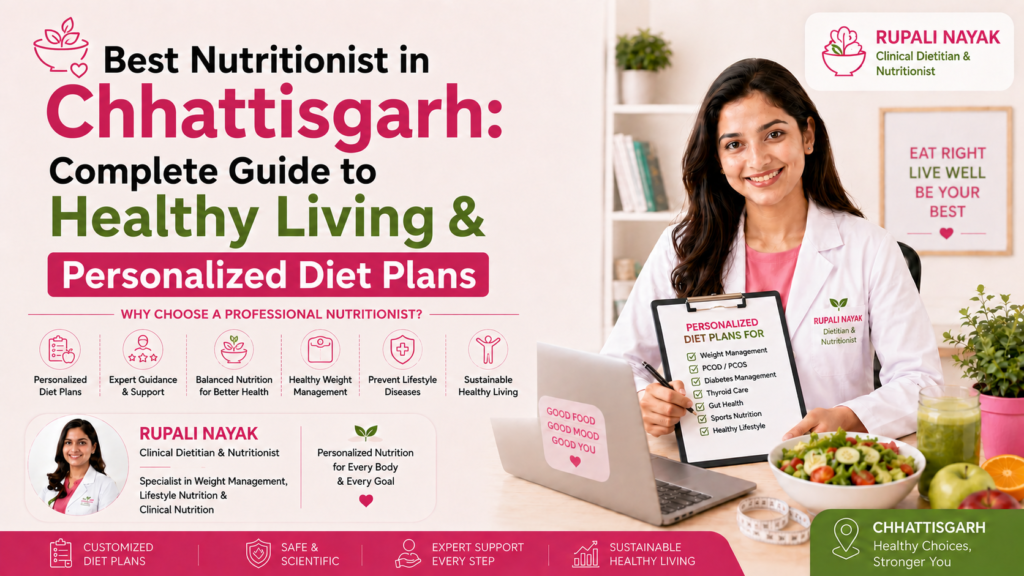
Choosing the Best Nutritionist in Chhattisgarh can be a valuable step toward building healthier and more sustainable eating habits. A personalized approach can help with balanced meal planning, appropriate portions, healthy food choices, weight management, and overall nutritional wellbeing. Rupali Nayak can provide personalized nutrition guidance based on individual lifestyle, dietary preferences, and health goals. Rather than following short-term diet trends, focusing on practical and consistent nutrition habits can help create a healthier lifestyle for the long term.