Egg quality is an important consideration for women planning pregnancy, whether they are trying to conceive naturally or preparing for fertility treatment. A balanced diet provides essential nutrients that support reproductive health, normal hormone function, and overall well-being. While no specific food or diet can guarantee improved egg quality, healthy eating habits may help create a supportive environment for fertility.
Understanding how to improve egg quality naturally starts with choosing nutrient-rich foods, maintaining balanced meals, and addressing individual nutritional needs. Antioxidants, healthy fats, protein, vitamins, and minerals all contribute to normal bodily functions associated with reproductive health.
This guide explores the best foods to improve egg quality, essential nutrients for female fertility, a practical fertility diet plan, and dietary considerations before IVF. It also explains when professional nutrition guidance may be helpful for women planning pregnancy.
What Is Egg Quality and Why Does It Matter?
Egg quality refers to characteristics of an egg that influence its ability to mature, be fertilized, and support early embryo development. It is different from ovarian reserve, which refers to the number of eggs remaining in the ovaries. A woman may have a relatively high ovarian reserve but still experience age-related changes in egg quality.
Egg quality is influenced by several factors, including age, genetics, reproductive health, and certain medical conditions. As women age, the proportion of eggs with chromosomal abnormalities generally increases, which can affect fertilization, embryo development, and miscarriage risk.
Nutrition is one aspect of overall reproductive health that women can work on. A varied, balanced diet supports normal cellular function and provides nutrients involved in energy production, antioxidant protection, and hormone metabolism. However, diet cannot reverse age-related changes or guarantee pregnancy.
Women trying to conceive can focus on sustainable habits, including eating a variety of vegetables and fruits, choosing whole grains, consuming adequate protein, and including healthy fats. A healthcare professional can assess individual fertility concerns and recommend appropriate investigations or treatment when needed.
READ ALSO : Diet to Improve Egg Quality Before Conception: Foods, Nutrients & Healthy Habits
Best Foods to Improve Egg Quality Naturally
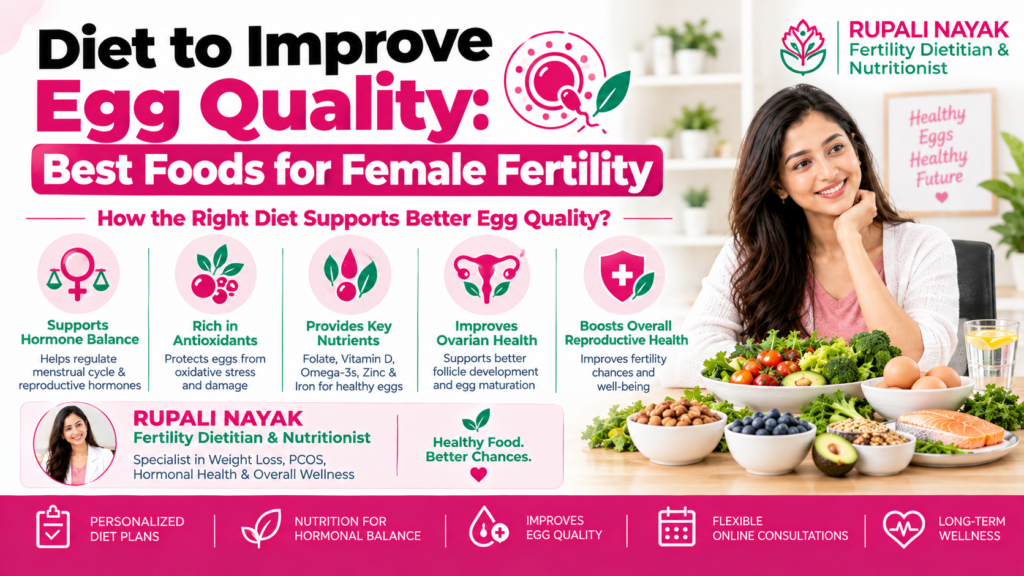
Choosing a variety of nutrient-rich foods is a practical part of a healthy fertility diet. The following options provide nutrients that support general reproductive health, although research has not established that any individual food directly improves egg quality.
1. Berries and Other Antioxidant-Rich Fruits
Blueberries, strawberries, oranges, guava, and pomegranates provide vitamin C and other antioxidant compounds. These nutrients help protect cells from oxidative damage as part of the body’s normal defence systems. Include different fruits throughout the week rather than relying on one particular fruit. Whole fruits are generally preferable to juices because they retain their fibre.
2. Leafy Green Vegetables
Spinach, fenugreek leaves, broccoli, and other green vegetables provide folate, fibre, and several essential micronutrients. Folate is particularly important before conception because adequate intake helps reduce the risk of neural tube defects in early pregnancy. Include cooked leafy vegetables in lunch or dinner, and discuss folic acid supplementation with your healthcare professional when planning pregnancy.
3. Nuts and Seeds
Walnuts, almonds, chia seeds, flaxseeds, and pumpkin seeds supply unsaturated fats, minerals, fibre, and other nutrients. Walnuts and flaxseeds also contain plant-based omega-3 fatty acid ALA. Add a small handful of unsalted nuts or seeds to breakfast, yoghurt, or salads. These foods support a balanced diet but are not proven treatments for poor egg quality.
4. Eggs, Lentils, and Other Protein Sources
Eggs, lentils, chickpeas, beans, tofu, and well-cooked lean meats provide protein needed for normal cell growth and tissue maintenance. Eggs also contain choline, while legumes supply folate and fibre. Include a variety of protein sources across meals according to your preferences. Women following vegetarian diets can combine legumes, dairy, soy foods, and other protein-rich options.
5. Oily Fish and Other Omega-3 Sources
Salmon, sardines, and other low-mercury oily fish provide omega-3 fatty acids, including EPA and DHA. These fats support several normal bodily functions. If you eat fish, choose options considered lower in mercury and follow local pregnancy food-safety guidance. Vegetarian alternatives include walnuts, chia seeds, and flaxseeds, although their ALA is converted to EPA and DHA only to a limited extent.
6. Whole Grains and Fibre-Rich Foods
Oats, whole-wheat roti, brown rice, barley, and millets provide fibre, carbohydrates, and varying amounts of vitamins and minerals. Replacing some refined grains with whole grains can help support a balanced eating pattern and normal blood glucose management. Pair whole grains with vegetables and protein rather than building meals around carbohydrates alone. Overall dietary quality matters more than a single food.
Essential Nutrients for Female Fertility
A fertility-focused diet should provide a broad range of nutrients rather than relying on supplements marketed for egg quality. Individual requirements vary with health, dietary pattern, age, and pregnancy plans.
1. Folate and Folic Acid
Folate occurs naturally in lentils, beans, leafy greens, and citrus fruits. Folic acid is the supplemental form recommended before conception to reduce the risk of neural tube defects. The American Society for Reproductive Medicine recommends at least 400 micrograms of folic acid daily for women trying to conceive. Ask your clinician whether your medical history requires a different dose.
2. Vitamin D
Vitamin D supports bone health, calcium absorption, and normal body functions. Sources include fortified foods, egg yolks, and certain oily fish. Sunlight exposure and dietary intake may not be sufficient for everyone, so testing may be appropriate when deficiency is suspected. Discuss supplementation with a healthcare professional rather than assuming that high doses will improve egg quality or fertility.
3. Vitamin B12
Vitamin B12 is essential for normal nerve function and red blood cell formation. It is found naturally in animal-derived foods, including dairy products, eggs, fish, and meat; fortified foods can help meet needs for vegetarians and vegans. Low B12 intake can be a concern with restrictive diets. Consider individual assessment if you have dietary limitations or a history of deficiency.
4. Iron
Iron helps the body produce haemoglobin, which carries oxygen in the blood. Lentils, beans, leafy vegetables, meat, and iron-fortified cereals can contribute to daily intake. Pair plant-based iron sources with vitamin C-rich foods to support absorption. Heavy periods or an existing deficiency may increase iron requirements, but iron supplements should be used according to professional advice.
5. Omega-3 Fatty Acids and Antioxidants
Omega-3 fats, vitamin C, vitamin E, and other nutrients contribute to normal cellular functions and antioxidant protection. Obtain them through a varied diet that includes fish or suitable plant foods, fruits, vegetables, nuts, and seeds. Evidence that antioxidant supplements directly improve natural fertility or egg quality remains limited, so discuss supplements with your clinician before starting them.
Diet Plan to Support Egg Quality
A fertility diet plan for women trying to conceive should be flexible, balanced, and suited to personal nutritional requirements. The following is an illustrative daily pattern, not a medically prescribed plan.
1. Breakfast
Start the day with vegetable poha, oats, or whole-wheat toast alongside eggs, milk, or unsweetened yoghurt, depending on your preferences. Add a serving of fruit for fibre and micronutrients. If you prefer an Indian vegetarian breakfast, besan chilla with vegetables is another option. Choose portions according to your appetite and individual energy needs.
2. Mid-Morning Snack
Choose guava, an orange, an apple, or another seasonal fruit. You can pair it with a small handful of unsalted almonds or walnuts. This combination provides fibre, healthy fats, and several micronutrients. Snacks are optional, so adjust them according to hunger, activity, and your overall meal pattern rather than following a rigid timetable.
3. Lunch
Build lunch around whole-wheat roti or brown rice, dal or beans, a cooked vegetable, and curd if tolerated. Include a variety of colourful vegetables throughout the week. This combination offers protein, fibre, and important vitamins and minerals. For non-vegetarian meals, fish or well-cooked lean chicken can replace or complement other protein sources.
4. Evening Snack and Dinner
For an evening snack, consider roasted chana, plain yoghurt, or a small portion of nuts. At dinner, combine roti or another whole grain with vegetables and a protein source such as paneer, tofu, lentils, or well-cooked fish. Drink water regularly and adapt the plan to your routine, medical needs, and cultural food preferences.
READ ALSO : Best Fertility Dietitian in Delhi: How Nutrition Can Support Egg and Sperm Health
Foods to Limit When Planning Pregnancy
No single food automatically causes poor egg quality. However, limiting certain foods and substances can support general health and safer preconception planning.
1. Highly Processed Foods
Frequent consumption of packaged snacks, processed meats, deep-fried foods, and meals high in salt or saturated fat can make it harder to maintain a balanced dietary pattern. You do not need to eliminate every convenience food. Focus on eating more whole foods, cooking at home when practical, and keeping highly processed options occasional rather than everyday staples.
2. Sugary Drinks and Excess Added Sugar
Soft drinks, sweetened energy drinks, and frequent sugary beverages can add substantial amounts of sugar without providing many essential nutrients. Choose water, plain milk, or unsweetened drinks more often. Whole fruit can satisfy a sweet craving while providing fibre. Women with diabetes or insulin resistance should seek individual advice on carbohydrate intake and blood glucose management.
3. Alcohol and Excessive Caffeine
Avoiding alcohol is the safest approach when pregnant or trying to conceive because early pregnancy may occur before it is recognised. Discuss caffeine intake with your healthcare professional and follow pregnancy-planning guidance. The American Society for Reproductive Medicine advises limiting alcohol and caffeine to minimal or moderate amounts while trying to conceive.
4. Unsupervised Fertility Supplements
Be cautious with herbal fertility remedies, high-dose antioxidants, and supplements promoted as egg-quality boosters. Some products have limited evidence, may interact with medication, or may be unsuitable during pregnancy. Review all supplements with your clinician, particularly before IVF. A supplement should address an identified need or established recommendation rather than replace a balanced diet or appropriate fertility care.
Can Diet Improve Egg Quality Before IVF?
Nutrition is an important part of preparing for in vitro fertilisation (IVF), but it is not a guaranteed way to improve egg quality or IVF success rates. Research on dietary patterns and assisted reproductive technology outcomes has produced mixed results. A balanced diet may support general health before treatment, while age, ovarian reserve, underlying medical conditions, and treatment factors also influence outcomes.
Women preparing for IVF can focus on the following practical steps:
- Eat balanced meals: Include vegetables, fruits, whole grains, protein-rich foods, and healthy fats regularly.
- Address nutritional deficiencies: Ask your healthcare professional whether tests for iron, vitamin B12, or vitamin D are appropriate based on your health history.
- Discuss folic acid: Follow professional guidance on taking folic acid before conception.
- Review supplements and medications: Tell your fertility specialist about all vitamins, herbal products, and supplements you use.
- Follow your treatment plan: Do not delay fertility assessment or prescribed treatment while waiting for dietary changes to produce results.
Women searching for a diet to support egg quality before IVF should remember that nutritional needs differ between individuals. A registered dietitian experienced in fertility nutrition can help develop a practical eating plan alongside the fertility specialist’s recommendations.
READ ALSO : Best IVF Nutritionist in Delhi: Complete Guide to IVF Diet And Nutrition
Frequently Asked Questions (FAQs)
1. Can diet help improve egg quality naturally?
A balanced diet provides nutrients that support normal cellular function and overall reproductive health. However, there is insufficient evidence that a particular diet can directly improve egg quality or reverse age-related changes. Nutrition is one part of a broader approach to preconception health.
2. What are the best foods for egg quality?
Fruits, leafy green vegetables, lentils, beans, nuts, seeds, whole grains, eggs, and suitable low-mercury fish can contribute to a nutrient-rich diet. Rather than relying on a single superfood, aim for dietary variety, adequate protein, and sufficient essential vitamins and minerals.
3. Which vitamins support female fertility?
Folate, vitamin B12, and vitamin D are important for normal bodily functions and preconception health. Iron is also important, particularly when deficiency is present. Women planning pregnancy should discuss folic acid supplementation and any additional nutritional requirements with their healthcare professional.
4. When should I consult a fertility dietitian in Delhi, Noida, or Gurgaon?
Consider consulting a qualified fertility dietitian if you need help planning meals before pregnancy, managing dietary restrictions, addressing nutritional deficiencies, or preparing for IVF. Online consultations may also be available. A dietitian can support nutritional planning but cannot replace medical fertility assessment or treatment.
Conclusion
A balanced fertility diet can help women meet their nutritional needs while preparing for pregnancy. Including fruits, vegetables, whole grains, protein-rich foods, nuts, and healthy fats is a practical starting point. Adequate folic acid intake, appropriate management of nutritional deficiencies, and healthy lifestyle habits also contribute to preconception health.
However, no specific food or supplement can guarantee improved egg quality or pregnancy. Age, reproductive health, and individual medical factors remain important, so professional guidance is valuable when concerns arise.
Dietitian Rupali Nayak can help women understand their nutritional needs and develop personalised eating plans for pregnancy preparation and fertility-related goals. Women in Delhi, Noida, and Gurgaon can explore suitable nutrition consultation options based on their requirements. For concerns about egg quality, irregular periods, or difficulty conceiving, combine nutrition guidance with advice from a qualified fertility specialist.