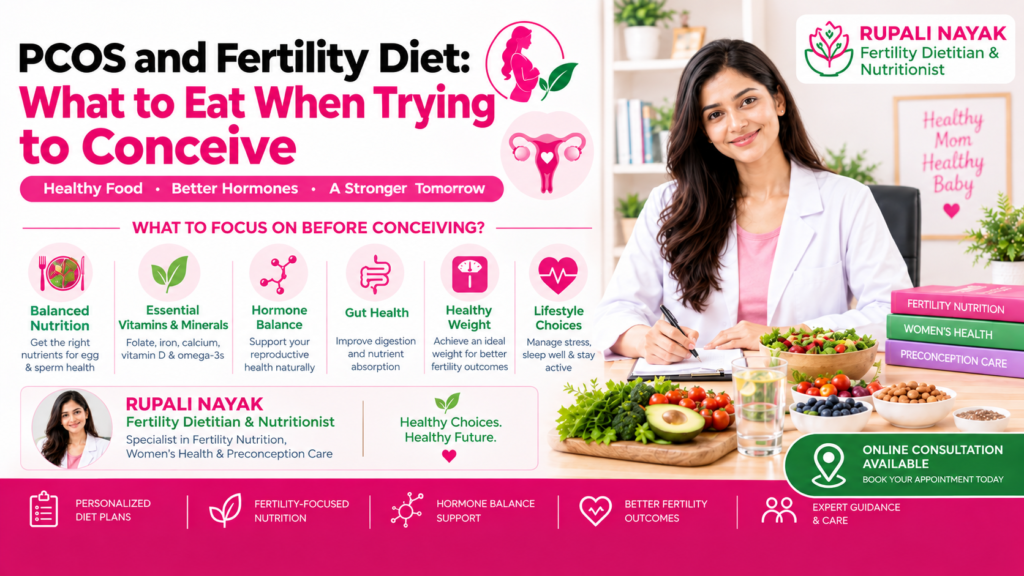
PCOS and fertility are closely connected, and nutrition can play an important role when trying to conceive. A balanced PCOS fertility diet may support healthy blood sugar levels, hormonal balance, ovulation, and overall reproductive health. Knowing what to eat with PCOS when trying to conceive can help you build sustainable eating habits before pregnancy. A practical preconception diet should focus on nutrient-dense foods, adequate protein, fibre, healthy fats, and essential vitamins rather than restrictive eating patterns.
How Does PCOS Affect Fertility?
Polycystic ovary syndrome (PCOS) is a hormonal condition that can affect menstrual cycles and ovulation. Irregular or infrequent ovulation may make conception more difficult for some women. Insulin resistance, hormonal changes, inflammation, and weight-related factors may also be associated with PCOS and fertility.
However, having PCOS does not mean pregnancy is impossible. Many women with PCOS conceive naturally or with appropriate medical support. Nutrition, regular physical activity, quality sleep, stress management, and medical care can all contribute to a healthy preconception approach.
A well-planned PCOS Diet Plan for Fertility can provide essential nutrients while supporting healthy blood glucose management. Including high-fibre carbohydrates, adequate protein, vegetables, fruits, healthy fats, and minimally processed foods can create a balanced nutritional foundation.
If you have irregular periods, difficulty identifying ovulation, or concerns about conception, professional guidance can be helpful. A PCOS Dietitian for Fertility can develop nutrition recommendations according to individual dietary preferences, lifestyle, nutritional requirements, and reproductive goals.
Best Diet for PCOS and Fertility
There is no single diet that works for every woman with PCOS. A sustainable eating pattern that supports overall metabolic and reproductive health is generally more practical. The following principles can help create an effective PCOS Diet Plan to Get Pregnant.
1. Choose High-Fibre Carbohydrates
Whole grains, oats, quinoa, brown rice, beans, lentils, vegetables, and other fibre-rich foods can be useful components of a PCOS Diet Plan. Fibre can slow digestion and support steadier blood glucose levels when included in balanced meals. Replacing highly refined carbohydrates with minimally processed choices can also improve meal quality and satiety. These foods provide fibre, vitamins, minerals, and plant compounds that can support a balanced Diet for PCOS to Get Pregnant.
2. Include Protein in Every Main Meal
Protein is an important part of a balanced PCOS Fertility Diet Plan because it supports satiety and helps create nutritionally complete meals. Eggs, fish, chicken, Greek yogurt, paneer, tofu, beans, and lentils are practical options. Combining protein with vegetables and high-fibre carbohydrates can create balanced meals. The appropriate amount depends on individual nutritional needs, activity levels, health goals, and dietary preferences.
3. Add Healthy Sources of Fat
Healthy fats are an important component of fertility nutrition. Nuts, seeds, avocado, olive oil, and suitable fish can provide essential fatty acids and other nutrients. Instead of completely avoiding dietary fat, focus on nutrient-dense sources and limit foods containing unhealthy fats. Including moderate amounts of healthy fat can improve overall dietary quality and make meals more satisfying.
4. Eat Plenty of Vegetables and Fruits
Vegetables and fruits provide fibre, vitamins, minerals, antioxidants, and other beneficial plant compounds. Include a variety of colourful vegetables through salads, cooked dishes, soups, or stir-fries. Whole fruits can also be part of a balanced Fertility Diet for Women. Whole fruits are generally preferable to sugary drinks and highly processed fruit products because they provide fibre and greater nutritional value.
5. Focus on Overall Dietary Quality
A fertility diet is not about finding one “miracle” food. Overall dietary quality matters more than individual ingredients. A balanced Fertility Diet Plan can include vegetables, fruits, whole grains, legumes, lean proteins, dairy or suitable alternatives, nuts, seeds, and healthy fats. Limiting highly processed foods while maintaining adequate nutrients can support general health. A Best Dietitian for Fertility can help create a sustainable plan without unnecessary restrictions.
Foods to Eat When Trying to Conceive
Understanding What to Eat with PCOS When Trying to Conceive can make daily meal planning easier. Rather than following extreme diets, focus on nutrient-rich foods that support overall health and Preconception Nutrition.
1. Eggs and Lean Protein
Eggs provide high-quality protein and several important nutrients. Lean proteins such as chicken, fish, tofu, paneer, and legumes can also support a balanced diet. Adequate protein helps create more complete meals when combined with vegetables and healthy carbohydrates. Include different protein sources throughout the week according to personal preferences and dietary requirements.
2. Leafy Green Vegetables
Spinach, fenugreek leaves, kale, lettuce, broccoli, and other green vegetables can be valuable additions to a preconception diet. They provide fibre, folate, vitamin C, vitamin K, and other micronutrients. Folate is particularly important before and during early pregnancy. However, food alone may not provide the amount recommended during pregnancy planning, so discuss appropriate folic acid supplementation with your healthcare provider.
3. Berries and Other Whole Fruits
Berries, oranges, apples, guava, kiwi, and other whole fruits can add fibre and antioxidants to a Fertility Diet for Conception. Fruit does not need to be completely avoided because of its natural sugar content. Focus on whole fruits and appropriate portions. Pairing fruit with yogurt, nuts, seeds, or another protein source can create a satisfying snack.
4. Nuts and Seeds
Almonds, walnuts, pumpkin seeds, chia seeds, and flaxseeds provide healthy fats, protein, fibre, and minerals. They can be added to oatmeal, yogurt, salads, smoothies, or consumed as snacks. Because nuts and seeds are energy-dense, portion awareness can be useful. Including different varieties can improve nutritional diversity within a PCOS Diet Plan for Fertility.
5. Whole Grains and Legumes
Oats, quinoa, brown rice, whole-wheat products, chickpeas, kidney beans, and lentils provide fibre and complex carbohydrates. These foods can be useful when building balanced meals for women with PCOS. Combining legumes or whole grains with vegetables and protein can create nutrient-dense meals. Carbohydrates do not need to be eliminated; portion sizes and food quality should be personalized.
6. Omega-3 Rich Foods
Fatty fish such as salmon and sardines provide omega-3 fatty acids, while walnuts, chia seeds, and flaxseeds provide plant-based sources. Including these foods can contribute to overall Fertility Nutrition. Women who are pregnant or trying to conceive should follow current food-safety recommendations regarding fish choices, serving frequency, and mercury exposure.
Foods to Limit with PCOS
When developing a PCOS Diet Plan for Trying to Conceive, the goal should not be unnecessary restriction. Instead, focus on limiting foods that are highly processed or provide substantial amounts of added sugar, unhealthy fats, or calories without sufficient nutrients.
1. Highly Sugary Foods and Drinks
Soft drinks, sweetened beverages, candy, pastries, and foods high in added sugar can provide substantial calories with limited nutritional value. Frequent intake may also make blood glucose management more challenging. Choose water, unsweetened beverages, whole fruits, and nutrient-dense snacks more often. Occasional treats do not automatically make a diet unhealthy; overall dietary patterns matter more.
2. Highly Refined Carbohydrates
White bread, refined cereals, many bakery products, and other highly processed carbohydrate sources may contain less fibre than whole-food alternatives. They do not have to be completely eliminated, but replacing them more often with whole grains, legumes, vegetables, and other high-fibre choices can improve dietary quality. Pairing carbohydrates with protein and healthy fats can also create more balanced meals.
3. Ultra-Processed Foods
Packaged snacks, fried fast foods, highly processed meats, and ready-to-eat products can contain high amounts of sodium, added sugar, saturated fat, or calories. Occasional consumption is different from relying heavily on these foods. A PCOS Nutritionist can help identify practical substitutions that fit your lifestyle rather than recommending unnecessary elimination.
4. Trans Fats and Excessively Fried Foods
Foods containing industrial trans fats should be minimized, while frequent consumption of heavily fried foods should also be limited. Choose cooking methods such as steaming, roasting, grilling, baking, or sautéing with suitable oils. The objective is to improve overall dietary fat quality while keeping meals enjoyable and sustainable.
5. Excessive Alcohol and Caffeine
When trying to conceive, alcohol and caffeine intake should be discussed with a healthcare professional. If pregnancy is possible, avoiding alcohol is the safest approach. Caffeine recommendations may also change after conception. Nutrition planning should therefore be aligned with current medical advice, especially during the preconception and early pregnancy stages.
Can a PCOS Diet Improve Ovulation?
A balanced diet can support factors associated with reproductive health, but it should not be presented as a guaranteed treatment for ovulation problems. PCOS affects women differently, and irregular ovulation can have multiple contributing factors.
A healthy Diet for Fertility may support blood glucose management, adequate nutrient intake, and healthy weight management where appropriate. Regular physical activity, sufficient sleep, stress management, and medical treatment may also contribute to reproductive health.
For some women, improving overall metabolic health may be associated with more regular menstrual cycles and improved ovulatory function. However, diet alone cannot guarantee ovulation or pregnancy.
A Best PCOS Dietitian for Fertility can help create an individualized nutrition approach, while a gynecologist or fertility specialist can assess ovulation and other reproductive factors. Combining appropriate nutrition with medical guidance is often the most comprehensive approach to PCOS and conception.
When to Consult a PCOS or Fertility Dietitian
A PCOS Dietitian can be helpful if you are struggling to create a sustainable eating routine or want nutrition guidance specifically tailored to PCOS. Professional support may be particularly useful when dealing with irregular cycles, insulin resistance, nutritional deficiencies, dietary restrictions, or difficulty managing weight.
A Best Fertility Dietitian for PCOS can combine fertility-focused nutrition with PCOS-specific dietary considerations. Rather than recommending a generic diet, a professional can consider your eating habits, lifestyle, nutritional requirements, food preferences, and conception goals.
A Fertility Nutritionist may also help women preparing for pregnancy by identifying potential nutritional gaps and creating practical meal strategies. Professional guidance can make Preconception Diet planning easier and more sustainable.
Medical guidance is also important if periods are very irregular or absent, ovulation is difficult to identify, or conception has not occurred despite trying. Nutrition support should complement, not replace, evaluation and treatment from qualified healthcare professionals.
FAQ
What is the best diet for PCOS and fertility?
The best diet for PCOS and fertility is generally a balanced eating pattern containing vegetables, whole fruits, high-fibre carbohydrates, adequate protein, healthy fats, and nutrient-dense foods. There is no single diet that works for everyone. Individual health needs, lifestyle, preferences, and reproductive goals should guide a personalized plan.
What should I eat with PCOS when trying to conceive?
Include vegetables, whole fruits, legumes, whole grains, eggs, lean proteins, nuts, seeds, healthy fats, and suitable dairy or alternatives. These foods can provide fibre, protein, vitamins, minerals, and other nutrients. A personalized PCOS Diet Plan to Get Pregnant should consider individual nutritional and medical requirements.
Can a PCOS diet help with ovulation?
A balanced diet may support metabolic health and factors associated with ovulation, particularly when combined with physical activity and healthy lifestyle habits. However, diet cannot guarantee ovulation or pregnancy. Persistent irregular cycles should be discussed with a qualified healthcare professional.
Is there a specific fertility diet for women with PCOS?
There is no universal fertility diet for women with PCOS. A practical approach generally focuses on balanced meals, adequate protein and fibre, nutrient-dense foods, healthy fats, and appropriate portions. The plan should be sustainable and personalized rather than based on extreme restrictions or claims about specific fertility foods.
Should I avoid carbohydrates if I have PCOS?
No. Carbohydrates do not need to be completely eliminated. Whole grains, legumes, vegetables, and other high-fibre carbohydrate sources can be included in a healthy diet. Choosing minimally processed carbohydrates and pairing them with protein, vegetables, and healthy fats can help create balanced meals.
When should I start preconception nutrition?
It is beneficial to establish healthy eating and lifestyle habits before pregnancy. Preconception Nutrition can help identify opportunities to improve dietary quality and address nutrient requirements. Women planning pregnancy should also discuss folic acid and other supplements with their healthcare provider.
Conclusion
PCOS and fertility can be influenced by several factors, and nutrition is one important part of a healthy preconception approach. Choosing high-fibre carbohydrates, quality protein, vegetables, fruits, whole grains, legumes, nuts, seeds, and healthy fats can support a balanced PCOS Diet Plan for Trying to Conceive. Limiting highly processed foods and maintaining sustainable lifestyle habits can further support overall health.
For personalized guidance, consulting the Best PCOS Dietitian or Best Fertility Dietitian can help you understand your nutritional requirements and develop a practical fertility-focused eating plan. Rupali Nayak can provide personalized nutrition guidance for individuals looking to manage PCOS, support fertility, and prepare nutritionally for conception.